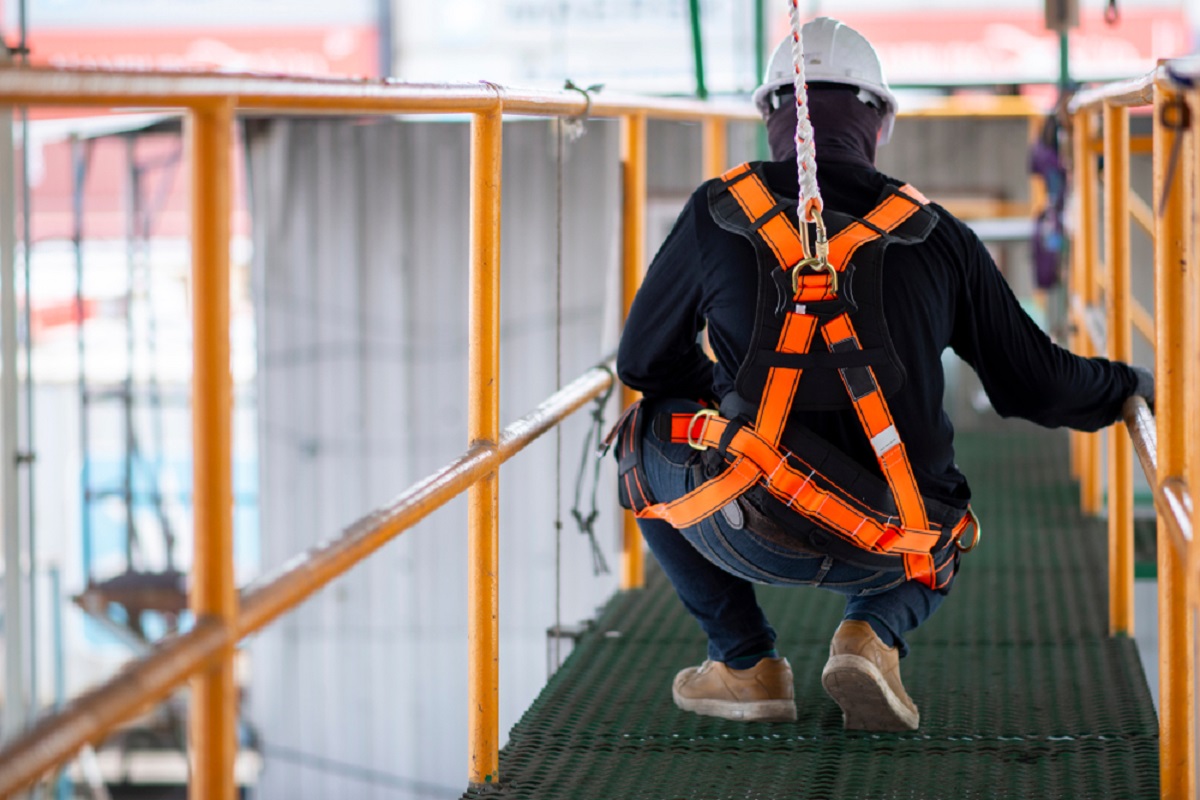
Common site safety mistakes the physical workspace, particularly in high-stakes sectors like heavy construction, energy, and large-scale manufacturing, is a landscape of controlled chaos. Every successful project is essentially a series of hazards being successfully managed in real-time. However, when safety is viewed as a static set of rules rather than a dynamic biological process, the gap between “work as imagined” and “work as done” begins to widen. This divergence is where most industrial accidents reside. It is not merely the absence of a hard hat or a faulty harness; it is a breakdown in the predictive intelligence of the organization.
True site safety is an emergent property of a complex system. It requires an understanding that human error is a symptom, not a cause. When an individual makes a mistake on-site, they are often operating within a framework that made that mistake inevitable—or at least highly probable. To address these vulnerabilities, we must look past the immediate physical trigger and interrogate the underlying pressures: the schedule, the procurement of equipment, and the cultural normalization of deviance. The most dangerous sites are not necessarily those with the most visible hazards, but those where the perception of risk has been dulled by a long history of “near-misses” that resulted in no immediate injury.
In this analysis, we move beyond the superficiality of safety posters and basic compliance checklists. We are examining the structural and psychological precursors to failure. By identifying the mechanics of how and why site protocols degrade, we can build more resilient systems that account for the reality of human fatigue and environmental unpredictability. This editorial serves as an authoritative examination of the pervasive vulnerabilities inherent in modern site operations, providing a strategic blueprint for those tasked with the long-term stewardship of human life and operational continuity.
Understanding “common site safety mistakes”
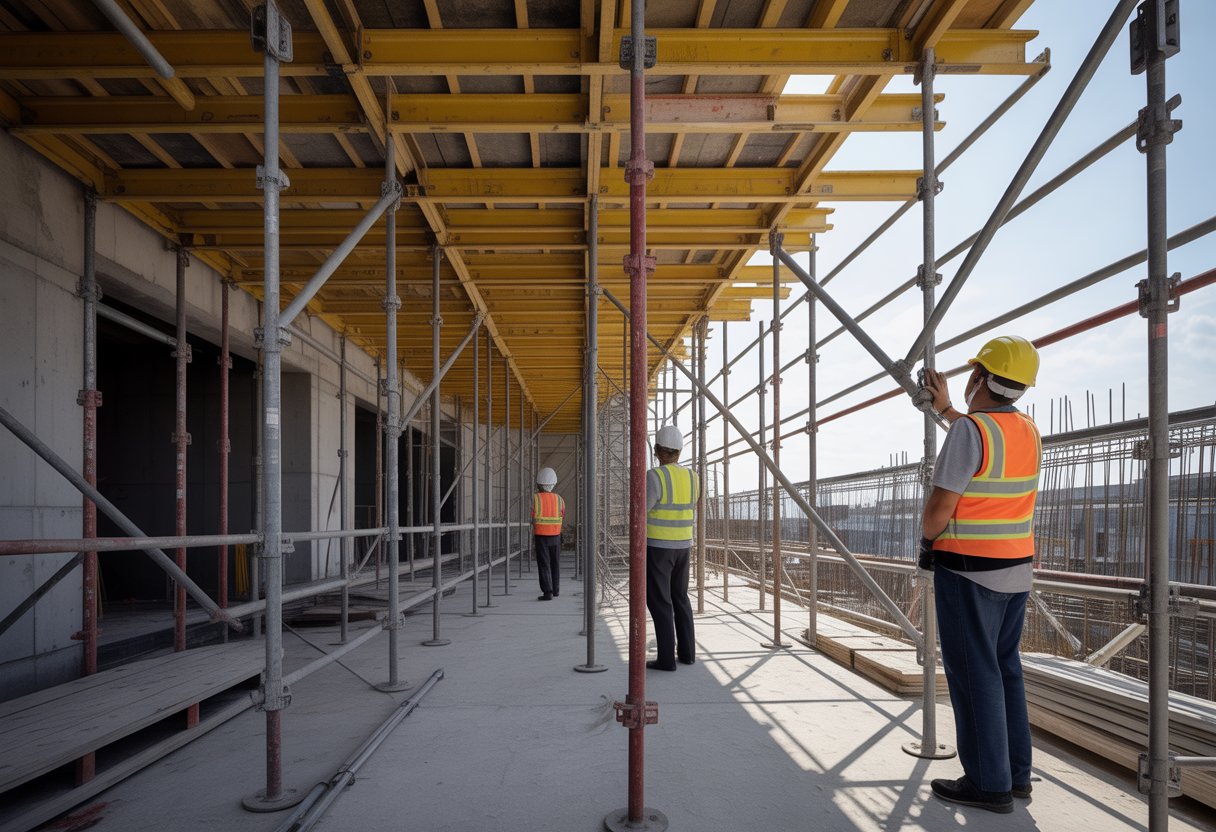
To effectively address common site safety mistakes, one must first recognize that “mistakes” are rarely the result of a single person’s negligence. Rather, they are the culmination of latent conditions within the organizational structure. A multi-perspective analysis suggests that these errors occur at the intersection of three domains: the physical (equipment failure), the cognitive (decision-making under stress), and the systemic (conflicting priorities between speed and safety). When we categorize an incident as a “mistake,” we often oversimplify the reality. For instance, a technician failing to lock out a power source is frequently a result of a poorly designed tag-out system or a production culture that stigmatizes downtime.
Common misunderstandings in site management often stem from a “Compliance-Only” mindset. Leaders may believe that because a site meets minimum regulatory standards, it is safe. This is a dangerous fallacy. Compliance is the floor, not the ceiling. The most significant oversimplification risk involves the “Bad Apple” theory—the idea that removing “careless” workers will solve the safety problem. In reality, if the system allows a mistake to happen once, it will happen again regardless of who is in the role. True site mastery involves designing “Forbearing Systems” that can tolerate a human error without it cascading into a fatality.
Furthermore, we must address the “Normalization of Deviance.” This occurs when a shortcut is taken—perhaps to save ten minutes on a three-hour task—and nothing bad happens. Because the negative consequence was absent, the shortcut becomes the new “standard” operating procedure. This erosion of the margin of safety is one of the most pervasive and invisible common site safety mistakes. Over time, the organization becomes blind to the risk until a unique set of variables aligns to trigger a catastrophe.
Contextual Background: The Shift from Compliance to Resilience
Common site safety mistakes the evolution of site safety has moved through three distinct eras. The “Technical Era” (1900s–1970s) focused on the engineering of the machine. If a saw had a guard and a boiler had a pressure valve, the site was considered managed. Following this, the “Human Error Era” (1980s–2000s) shifted the focus toward individual behavior, leading to the rise of Behavioral Based Safety (BBS). While BBS improved awareness, it often led to a culture of blame, where the focus remained on “fixing the worker.”
We are currently in the “Systemic Resilience Era.” This modern approach acknowledges that systems are inherently messy and that humans are the most flexible element in those systems. Instead of trying to eliminate human variability, we try to harness it. Safety is no longer seen as just “the absence of accidents,” but as “the presence of capacity.” This means ensuring that even if a worker drops a tool, a secondary system (like netting or tethering) prevents that error from becoming an event.
The historical trajectory shows that as sites become more technologically complex, the risks become more “tightly coupled.” In a simple system, a failure in part A doesn’t necessarily affect part D. In a modern high-rise project or a chemical plant, every component is interdependent. A delay in a safety inspection for a crane on Monday can lead to an exhausted crew working overtime on Thursday, which in turn leads to a critical lifting error on Friday. Understanding these systemic links is the hallmark of the contemporary safety professional.
Conceptual Frameworks and Mental Models Common Site Safety Mistakes
To navigate the complexity of site risks, we utilize several diagnostic frameworks:
The “Swiss Cheese” Model of Systemic Failure
Proposed by James Reason, this model posits that in any system, there are multiple layers of defense (the slices of cheese). Each layer has holes (weaknesses). An accident occurs only when the holes in all the layers align, allowing a hazard to pass through. To combat common site safety mistakes, we don’t just patch one hole; we ensure the “slices” are moved or multiplied so the holes never align.
The “Hierarchy of Controls”
This is the fundamental mental model for risk mitigation. It ranks strategies from most effective to least effective:
-
Elimination: Physically remove the hazard.
-
Substitution: Replace the hazard.
-
Engineering Controls: Isolate people from the hazard (e.g., guards, ventilation).
-
Administrative Controls: Change the way people work (e.g., training, signage).
-
PPE: Protect the worker with equipment. The most frequent mistake is relying on PPE (the weakest link) while ignoring the possibility of Elimination or Engineering.
The “High Reliability Organizing” (HRO) Model
HROs (like aircraft carriers or nuclear plants) operate in high-hazard environments but have very few accidents. They share five traits: preoccupation with failure, reluctance to oversimplify, sensitivity to operations, commitment to resilience, and deference to expertise (listening to the person on the ground, regardless of rank).
Key Categories of Operational Failure
Safety failures typically cluster around specific operational themes. Understanding the trade-offs in each is essential for proactive management.
Realistic Decision Logic
When a site supervisor is faced with a 24-hour delay due to a missing trench box, the logic often defaults to “the soil looks stable enough.” This is a common site safety mistake of “Heuristic Over-reliance.” The professional response is to realize that soil stability is not a visual metric but a geological one. The decision logic must be: “If the cost of the safety intervention is less than the cost of a total project stoppage and legal liquidation, the intervention is always the cheaper option.”
Detailed Real-World Scenarios Common Site Safety Mistakes
The “Non-Standard” Lift
-
The Constraint: A specialized HVAC unit needs to be placed on a roof, but the standard crane is 50 miles away and the rental crane is slightly under-capacity for the reach required.
-
The Mistake: Using “Bypasses” on the crane’s Load Moment Indicator (LMI) to force the lift.
-
Failure Mode: A sudden gust of wind changes the leverage, causing the crane to tip.
-
Second-Order Effect: Not just the loss of the crane, but the structural compromise of the new building and the total loss of the site’s insurance bond.
The Confined Space “Rescue”
-
The Constraint: A worker collapses in a utility vault due to nitrogen displacement.
-
The Mistake: An untrained bystander or co-worker jumps in to help without a respirator.
-
The Result: Two fatalities instead of one.
-
Second-Order Effect: The psychological trauma to the remaining crew leads to a 40% drop in productivity for the next quarter.
The Scaffolding “Modification”
-
The Constraint: A worker needs to reach a corner that is 2 feet beyond the scaffold platform.
-
The Mistake: Placing a ladder on top of the scaffold platform.
-
The Result: The outward thrust of the ladder kicks the scaffold away from the wall.
-
Logic: This is a failure to understand “Lateral Stability” in vertical structures.
Planning, Cost, and Resource Dynamics
The “Cost of Safety” is often viewed as an expense, whereas it should be viewed as “Risk Insurance.”
The “Iceberg” of Indirect Costs
A single OSHA “Willful” violation or a major site injury carries costs that far exceed the fine. These include:
-
Schedule Erosion: The site is a crime scene for days or weeks.
-
Insurance Premiums: A “mod factor” increase that lasts for 3–5 years.
-
Reputational Damage: Difficulty in winning future “Big Box” or government contracts.
-
Legal Defense: Often costing $200,000+ before a settlement is even discussed.
Tools, Strategies, and Support Systems Common Site Safety Mistakes
Modern site safety utilizes a suite of preventative technologies and protocols:
-
Wearable Proximity Sensors: Tags on vests that vibrate when a worker enters the “swing radius” of heavy machinery.
-
Drone-Based Site Surveys: Using high-resolution imagery to inspect scaffolding and roof edges without putting an inspector at risk.
-
Digital Permitting Systems: Ensuring that hot work or confined space entry cannot begin until a digital “check-off” of all safety parameters is completed.
-
BIM (4D Safety): Adding the “time” dimension to 3D models to predict when two hazardous trades (e.g., welding and fueling) might be scheduled in the same area.
-
Psychological Safety Protocols: Anonymous reporting systems that allow workers to stop a job without fear of retaliation.
-
Real-time Gas Monitoring: Connected sensors that alert a central hub if oxygen levels dip in a remote part of the site.
Risk Landscape and Failure Taxonomy
We must categorize risks not just by their type, but by their “Compounding” potential.
-
Latent Risks: The poorly maintained ladder that sits in the back of the truck for months.
-
Active Risks: The moment the worker actually climbs that ladder.
-
Compounding Risks: Climbing that ladder on a windy day, while exhausted, to perform a task that was never in the original work order.
A “Taxonomy of Error” helps in post-incident analysis. Was the mistake a Slip (doing the right thing wrongly), a Lapse (forgetting a step), or a Violation (deliberately breaking a rule)? Most common site safety mistakes are Slips and Lapses, yet most disciplinary actions focus on Violations. This misalignment prevents the organization from learning.
Governance, Maintenance, and Long-Term Adaptation Common Site Safety Mistakes
A site is a living entity; safety governance must adapt as the project moves from excavation to finishing.
Layered Safety Checklist:
-
Daily: “Tailgate” meetings focusing on the specific hazards of that day’s tasks, not generic safety talk.
-
Weekly: Cross-trade inspections. Have the electricians inspect the plumbers’ area and vice versa. Fresh eyes see hidden risks.
-
Monthly: Deep-dive audit of the “Maintenance Logs.” Are the fire extinguishers actually being checked, or is someone just signing the tag?
Measurement, Tracking, and Evaluation
Traditional safety metrics (TRIR, DART) are “Lagging Indicators”—they tell you how many people you already hurt. To prevent common site safety mistakes, we must track “Leading Indicators.”
-
Leading Indicators: Number of “Good Catches” reported; percentage of employees with up-to-date certifications; average time to close out a safety observation.
-
Qualitative Signals: Do workers feel comfortable “Stopping the Job”? If the answer is “only if the boss isn’t looking,” your safety culture is in a state of failure.
-
Documentation Examples:
-
JHA (Job Hazard Analysis): A pre-task document signed by the actual workers, not just the foreman.
-
Equipment Inspection Logs: Verifiable evidence that the crane cables and harness points are sound.
-
Common Misconceptions and Oversimplifications Common Site Safety Mistakes
-
Myth: “Experienced workers don’t make mistakes.” Correction: Experience often leads to overconfidence and the “Normalization of Deviance.”
-
Myth: “Safety slows down the job.” Correction: A single accident can shut down a job for weeks; proactive safety is the ultimate “Schedule Optimizer.”
-
Myth: “PPE is the most important thing.” Correction: PPE is the last line of defense. If you are relying on it, your engineering controls have already failed.
-
Myth: “I don’t need a permit for a quick 5-minute task.” Correction: Gravity and electricity do not care about the duration of the task.
Ethical and Practical Considerations
The ethical burden of site safety lies in the “Duty of Care.” A site supervisor is not just managing a budget; they are managing the “return-home” status of every human being on that site. This requires a level of “Intellectual Honesty”—the willingness to admit when a schedule is unrealistic or when a piece of equipment is sub-par. Practically, this means creating a culture where the “Whistleblower” is the most valued person on the crew, as they are the ones who prevent the catastrophic loss of the asset and human life.
Conclusion Common Site Safety Mistakes
Mastering site safety is not about the elimination of all hazards—which is a physical impossibility—but about the mastery of the “Margin of Safety.” It is the constant, restless pursuit of identifying where the system is brittle and where it is resilient. The most significant common site safety mistakes are not individual acts of carelessness, but organizational acts of complacency. By shifting from a culture of compliance to a culture of resilience, we create sites that are not just “accident-free,” but “operationally excellent,” where the preservation of life is the primary metric of project success.
Leave a Reply