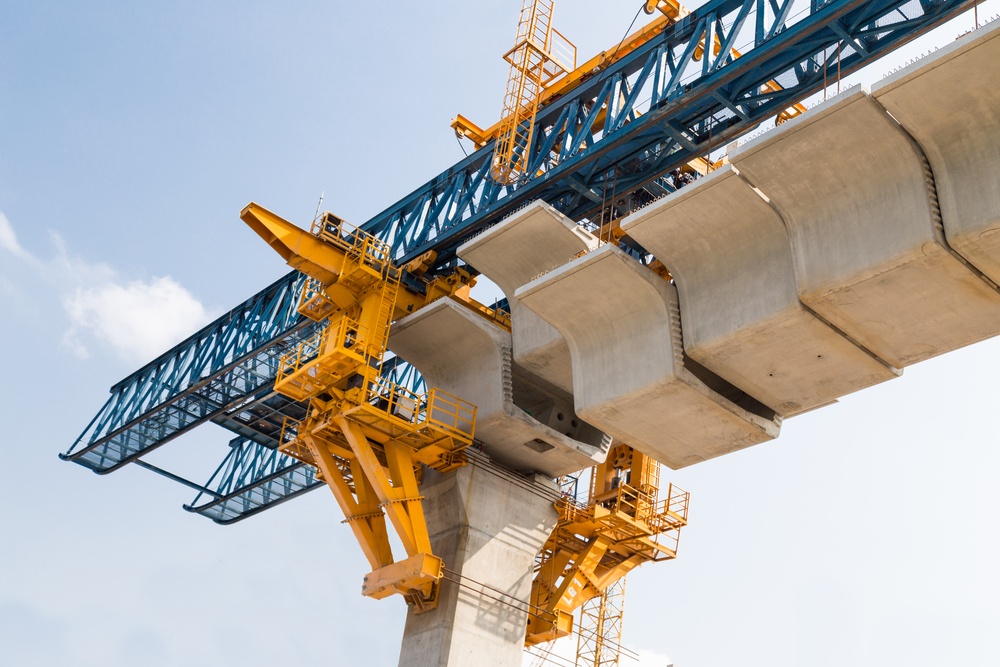
Compare reinforced concrete options the fundamental tension of modern architecture is localized within the molecular bond between cementitious paste and high-tensile reinforcement. While concrete provides the compressive “bones” of our built environment, its inherent brittleness necessitates a internal skeletal system capable of managing the shearing forces and tensile stresses that gravity and seismic activity impose. This marriage of disparate materials—one mineral, one metallic or synthetic—is the most significant engineering achievement of the industrial age. However, as we move into an era of heightened environmental scrutiny and extreme climate volatility, the “standard” pour is no longer a viable default.
Today, the professional must navigate a landscape of specialized composites, from traditional carbon steel rebar to basalt polymers and ultra-high-performance fiber mixes. The decision to select one over the other is not merely a matter of structural capacity; it is a complex calculation of “Carbon Debt,” “Corrosion Resistance,” and “Thermal Compatibility.” In a high-salinity coastal environment, a standard steel-reinforced slab is a depreciating asset with a predetermined failure date. Conversely, in a seismic zone, the ductility of the reinforcement is the only factor standing between a building’s survival and a catastrophic brittle failure.
We are witnessing a shift from “Volume-Based Construction” to “Performance-Based Engineering.” This transition requires a departure from the “black-box” mentality where concrete is viewed as a generic commodity. To build for the long term—to create assets that survive for a century rather than a mortgage cycle—requires a rigorous interrogation of how different reinforcement strategies interact with the chemistry of the mix. This editorial serves as a definitive reference for that interrogation, analyzing the structural, economic, and systemic nuances that define the upper echelon of reinforced concrete design.
Understanding “compare reinforced concrete options”
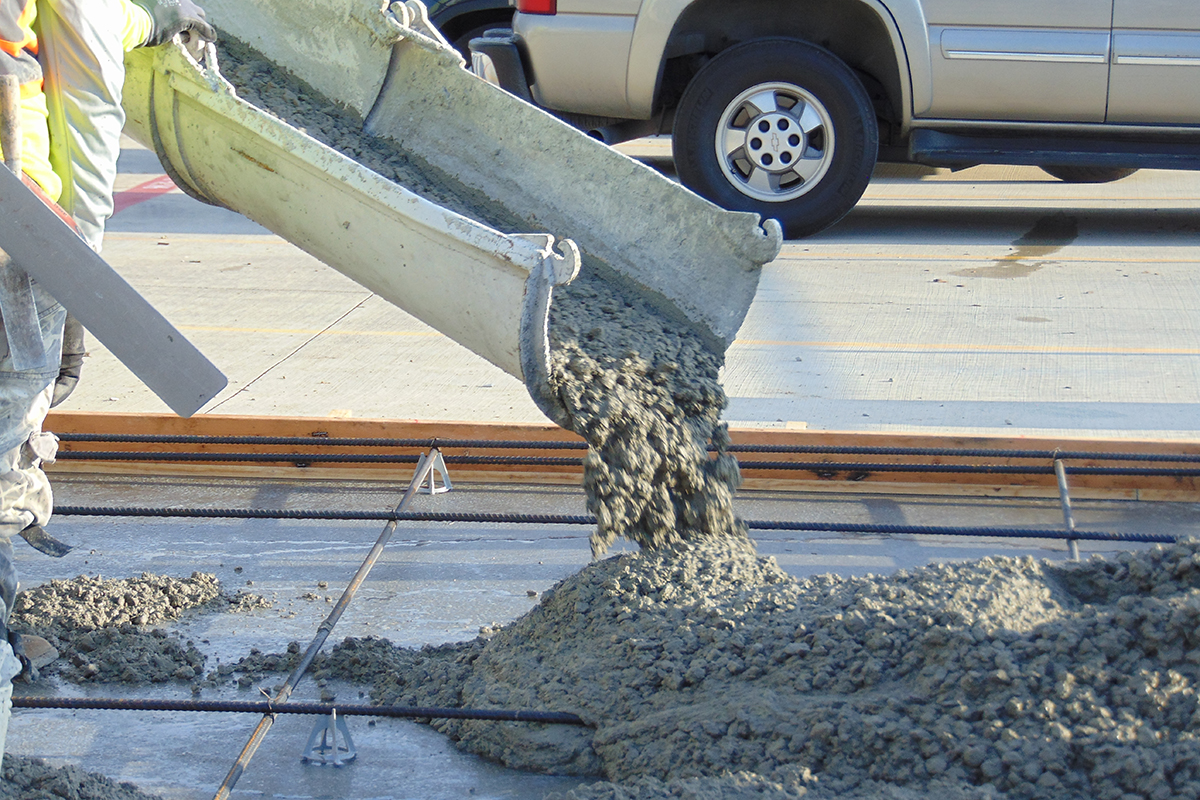
To accurately compare reinforced concrete options, one must move beyond the binary of “strong versus weak.” Structural integrity is a multi-dimensional metric that includes stiffness, ductility, and durability. A common misunderstanding in the procurement phase is that “Higher Strength” (measured in PSI) is always the objective. In reality, an overly stiff concrete mix with high-strength but low-ductility reinforcement can be more dangerous in an earthquake than a “weaker” but more flexible assembly. The “best” option is the one that achieves the optimal “Strain Compatibility”—the ability of the concrete and the reinforcement to expand and contract at similar rates without de-bonding.
A multi-perspective analysis reveals that we are comparing “Systems,” not just materials. For instance, comparing “Glass Fiber Reinforced Polymer” (GFRP) to traditional “Epoxy-Coated Steel” requires looking at the “Bond Stress” profile. GFRP does not corrode, making it ideal for bridge decks in snowy climates where road salt is prevalent. However, GFRP has a lower “Modulus of Elasticity,” meaning it will deflect more under the same load than steel. Therefore, the “Option” isn’t just the bar; it’s the entire structural depth of the beam designed to accommodate that deflection.
Oversimplification risks often center on the “Initial Cost” vs. “Life-Cycle Cost.” A standard carbon-steel reinforcement plan is the cheapest at the point of purchase but carries a massive “Maintenance Tail” in harsh environments. When professionals compare reinforced concrete options, they are essentially performing a “Probabilistic Risk Assessment” of when the alkalinity of the concrete will drop enough to allow the steel to oxidize. The highest tier of planning utilizes “Service Life Modeling” to determine if a 20% premium on stainless steel rebar today prevents a 200% repair cost in thirty years.
Contextual Background: The Evolution of the Reinforced Matrix
Compare reinforced concrete options the history of reinforced concrete is a narrative of managing “Internal Friction.” Joseph Monier’s 19th-century patent for reinforced flower pots was the first recognition that steel could compensate for concrete’s lack of tension. This evolved into the “Systeme Hennebique,” which standardized the use of stirrups to manage shear forces. For much of the 20th century, the “Standard Option” was simple: mild carbon steel and Portland cement. This was the engine of the post-war building boom, providing a cheap, fire-resistant, and relatively durable solution for the burgeoning American suburbs.
However, the “Corrosion Crisis” of the 1970s and 80s—where thousands of bridge decks and parking garages began to crumble due to “Rebar Cyanosis” (the expansion of rusting steel)—forced a radical re-engineering of the materials. We saw the introduction of epoxy coatings, which acted as a physical barrier but were prone to “pinhole” failures. This led to the development of the “Secondary Reinforcement” era, where micro-fibers (steel, synthetic, and glass) were added to the mix to control “Plastic Shrinkage” cracks before the main rebar even took the load.
Today, we are in the “Synthetic and Bio-Integrated” era. The current evolution is driven by the need for “Carbon-Neutral” binders and non-metallic reinforcement that is immune to the chemical attacks of chlorides and sulfates. We are moving away from the “Dumb Slab” toward the “Sensor-Integrated Matrix,” where the reinforcement itself can act as a diagnostic tool, sending data on strain and temperature back to a centralized building management system.
Conceptual Frameworks and Mental Models Compare Reinforced Concrete Options
To evaluate the viability of a reinforcement strategy, professionals apply several core mental models:
The “Passivation Layer” Model
Concrete is naturally alkaline (high pH). This alkalinity creates a microscopic “Passivation Layer” around steel rebar that prevents it from rusting. This framework evaluates an “Option” by how well it maintains this pH level or whether it renders the pH level irrelevant (as with carbon fiber or basalt).
The “Sacrificial Ductility” Framework
In seismic engineering, we assume the building will undergo damage. This model evaluates reinforcement based on its “Yield Plateau”—how much it can stretch and deform without snapping, absorbing the energy of an earthquake.
The “Interfacial Transition Zone” (ITZ) Model
This model focuses on the microscopic area where the concrete meets the reinforcement. The “Best” options are those that minimize the porosity of the ITZ, ensuring that the two materials act as a single monolithic unit rather than slipping under load.
Key Categories: Materials, Engineering, and Trade-offs
Selecting the appropriate reinforcement path requires matching the material chemistry to the environmental stressors of the site.
Decision Logic for Reinforced Selection
-
For High-Chloride (Coastal) Environments: Prioritize GFRP or Stainless Steel. The “Corrosion Threshold” is too high for carbon steel to survive without constant, expensive cathodic protection.
-
For Seismic Zones (California/Pacific NW): Prioritize High-Ductility Carbon Steel with “Mechanical Couplers” rather than simple lap-splices. The goal is to allow the frame to sway without the rebar “pulling out” of the concrete.
-
For Industrial Warehouse Floors: Prioritize Macro-Synthetic Fiber Reinforced Concrete. This eliminates the labor-intensive “rebar mat” while providing superior resistance to the “curling” and “spalling” caused by heavy forklift traffic.
Detailed Real-World Scenarios Compare Reinforced Concrete Options
The “Salt-Spray” Parking Garage
-
Constraint: A multi-level garage within 1,000 feet of the Atlantic Ocean.
-
The Conflict: Conventional steel will expand and “pop” the concrete (spalling) within 15 years.
-
The Solution: Galvanized Steel for the primary beams and GFRP for the secondary floor mesh.
-
Second-Order Effect: Because GFRP is lighter than steel, the “dead load” of the building is reduced, potentially allowing for smaller, cheaper footings.
The “Ultra-Slim” Architectural Feature
-
Constraint: A cantilevered roof that must appear “paper-thin” but carry heavy snow loads.
-
The Solution: UHPC (Ultra-High-Performance Concrete) with a dense matrix of steel micro-fibers.
-
Logic: UHPC has compressive strengths exceeding 20,000 PSI and inherent tensile strength. This allows for a 4-inch slab where a traditional reinforced slab would require 12 inches.
The “Chemical Immersion” Tank
-
Constraint: A secondary containment tank for a wastewater treatment plant.
-
The Solution: Basalt Fiber Reinforced Polymer (BFRP).
-
Reasoning: Basalt is naturally resistant to the acidic environment of sewage treatment, which would aggressively attack the lime in the concrete and the steel in the reinforcement simultaneously.
Planning, Cost, and Resource Dynamics
The “Hard Costs” of reinforcement are dictated by the global price of iron and the energy intensity of polymer production.
The “Hidden Labor” Delta
When you compare reinforced concrete options, you must account for the “Weight-to-Work” ratio. Steel is heavy and requires specialized “rebar tiers” and cranes. GFRP is 25% the weight of steel; while the material is more expensive, the labor of placing it is significantly faster and safer. A sophisticated developer looks at the “Installed Cost” rather than the “Invoice Price” of the material.
Tools, Strategies, and Support Systems
Modern reinforced concrete is a “Precision Assembly” process:
-
3D Rebar Modeling (BIM): Essential for “Congested” nodes where too many bars would prevent the concrete from flowing (creating “honeycombing”).
-
Mechanical Couplers: Replacing “Lap Splices.” These threaded connectors ensure the load is transferred directly through the steel, not just through the “bond” with the concrete.
-
Inductive Rebar Scanners: Used to verify the “Concrete Cover” (the distance from the bar to the surface). If the cover is too shallow, the bar will rust prematurely.
-
Internal Relative Humidity (RH) Sensors: Embedded in the slab to determine exactly when the concrete is dry enough to apply a finish without delaminating.
-
Corrosion Inhibitors (Admixtures): Chemicals added to the wet mix that “migrate” to the steel to bolster the passivation layer.
-
Heated Formwork: To ensure that the concrete reaches its “Critical Strength” in winter months before the reinforcement takes the full load.
Risk Landscape and Failure Taxonomy Compare Reinforced Concrete Options
-
The “Carbonation” Failure: CO2 from the air slowly penetrates the concrete, lowering the pH. Once the pH hits 9, the steel’s protection is gone. This is the “silent killer” of city skyscrapers.
-
Chloride Pitting: In marine areas, chloride ions “tunnel” through the concrete. They don’t rust the whole bar; they create “pits” that can snap a high-tension bar with no warning.
-
The “Bond-Slip” Event: If the concrete mix is too “soupy” (high water-cement ratio), it won’t grip the rebar. Under load, the bar simply slides through the concrete like a straw through a lid.
-
Thermal Expansion Cracking: Large concrete pours generate massive heat (heat of hydration). If the reinforcement doesn’t have “Expansion Loops,” the heat will crack the green concrete before it even sets.
Governance, Maintenance, and Long-Term Adaptation
A reinforced concrete structure is a “Chemical Reactor” that requires lifelong monitoring.
Layered Maintenance Checklist:
-
Annual: Visual inspection for “Rust Staining” (the tell-tale orange bleed) and “Delamination” (using a chain-drag test to find hollow spots).
-
5-Year Cycle: Half-cell potential testing. This measures the “Electrical Voltage” of the rebar to see if corrosion is happening before the concrete cracks.
-
10-Year Cycle: Depth of Carbonation testing. Taking a “core sample” and spraying it with phenolphthalein to see how much “Safe” concrete is left.
Measurement, Tracking, and Evaluation Compare Reinforced Concrete Options
-
Leading Indicators: The “Water-Cement Ratio” at the truck. Even an extra five gallons of water can ruin the long-term durability of the reinforcement’s bond.
-
Lagging Indicators: “Crack Width” over time. If a crack exceeds 0.3mm, it becomes a “Superhighway” for salt and water to reach the reinforcement.
-
Documentation:
-
Mill Certificates: Proving the steel isn’t “Brittle” and meets ASTM standards.
-
Slump Test Logs: Verifying the consistency of every truckload.
-
Cylinder Breaks: Proving the concrete reached its designed strength at 7, 28, and 56 days.
-
Common Misconceptions and Oversimplifications
-
Myth: “Concrete gets stronger forever.” Correction: While the chemical reaction continues, the “Durability Clock” is ticking down as CO2 and chlorides penetrate the surface.
-
Myth: “Fiber replaces rebar.” Correction: Fiber handles “Secondary Stress” (shrinkage). Rebar handles “Primary Stress” (the actual weight of the building). You cannot build a 10-story building with just fiber.
-
Myth: “Epoxy rebar is the ultimate solution.” Correction: If the epoxy is scratched during installation, the corrosion will concentrate at that one scratch, failing faster than if the bar had no coating at all.
-
Myth: “Rusty rebar is bad.” Correction: A light “flash rust” actually improves the bond between steel and concrete. It’s “flaky” or “pitting” rust that is dangerous.
Ethical and Practical Considerations Compare Reinforced Concrete Options
In the modern landscape, the “Ethic of the Assembly” is paramount. Concrete production is responsible for roughly 8% of global CO2 emissions. Therefore, the most “Ethical” reinforcement choice is the one that extends the life of the building to its absolute maximum. Demolishing a building after 40 years because the rebar failed is an ecological disaster. Utilizing “Basalt” or “Recycled Steel” and high-density, low-clinker binders represents the only path forward for a sustainable urban environment.
Conclusion
The ability to compare reinforced concrete options is the differentiator between a “Builder” and an “Engineer of Record.” We have moved past the era where a single standard could serve all purposes. The future of the built environment lies in “Hybrid Assemblies”—utilizing the ductility of steel where seismic risks are high, and the chemical immunity of polymers where the sea or industry threatens the structure. A truly high-performance concrete structure is an act of balance: a synthesis of mineral mass and synthetic tensile strength, engineered not just for the loads of today, but for the chemistry of the next century.
Leave a Reply