Common foundation repair mistakes the integrity of a building is fundamentally a negotiation with the soil beneath it. While architectural aesthetics capture the public imagination, the structural viability of any significant asset rests upon a hidden, subterranean system that must reconcile the rigid requirements of masonry with the fluid, shifting dynamics of geology. In the United States, where diverse soil profiles range from the expansive clays of the Sunbelt to the frost-susceptible silts of the North, foundation management is less a matter of “fixing” and more an exercise in forensic engineering and environmental adaptation.
To address the failure of a foundation is to engage with a high-stakes, low-visibility problem where the margin for error is razor-thin. Unlike a roof leak or a localized plumbing failure, a compromised foundation threatens the “Geometrical Sanity” of the entire structure. A differential settlement of just one inch can initiate a cascading failure of the building’s envelope, compromising window seals, distorting door frames, and fracturing the rigid bonds of the interior finishes. Consequently, the remediation of these issues requires a sophisticated understanding of “Hydraulic Loading” and “Soil-Structure Interaction.”
In the current market, the pressure to find rapid, cost-effective solutions has led to an uptick in reactive repairs that fail to address the root systemic causes. Many property owners and managers view foundation work through the lens of a “commodity purchase,” assuming that all piers, piles, and stabilization methods are interchangeable. This perspective is fundamentally flawed. A successful intervention requires a diagnostic rigor that accounts for the historical drainage patterns of the site, the chemistry of the local water table, and the long-term seismic or climatic projections for the region. This article provides a definitive, editorial interrogation of the pitfalls inherent in this sector, moving beyond superficial remedies to examine the systemic realities of structural stabilization.
Understanding “common foundation repair mistakes”
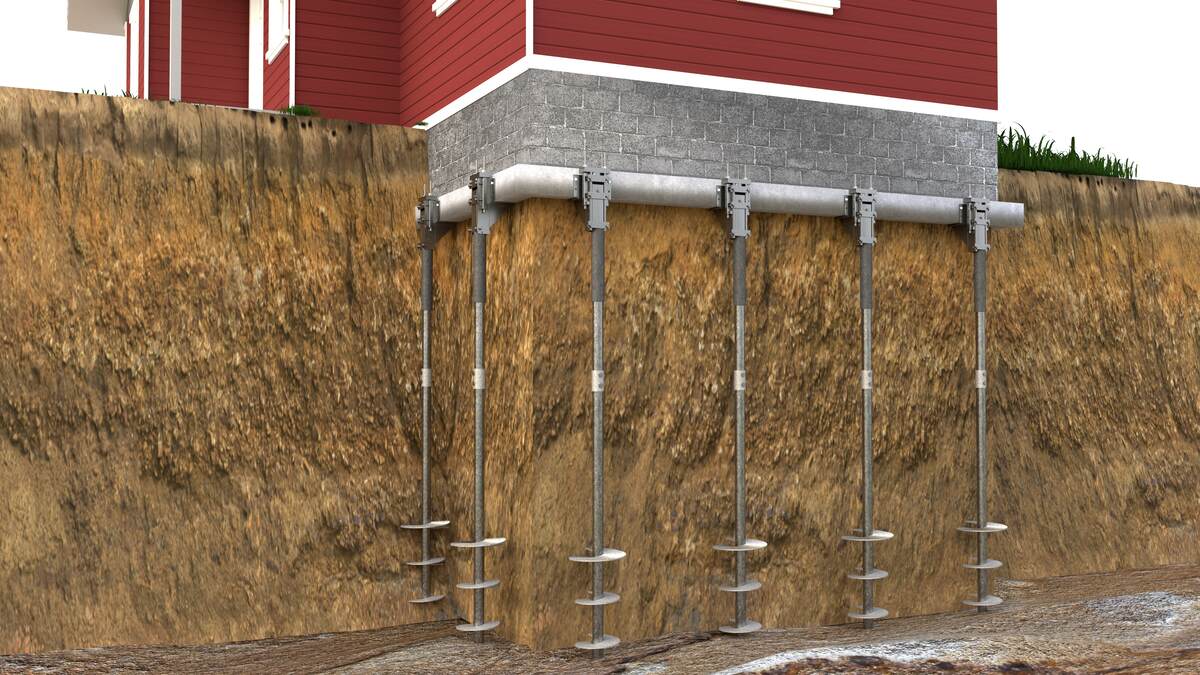
To categorize common foundation repair mistakes effectively, one must distinguish between “Application Errors” and “Diagnostic Failures.” An application error occurs when a technician installs a high-quality pier incorrectly—perhaps failing to reach the necessary torque or load-bearing strata. However, the more catastrophic and expensive errors are diagnostic. This involves a fundamental misunderstanding of why the foundation is moving. For example, installing rigid piers under a home that is experiencing “Heave” (soil expansion) rather than “Settlement” (soil contraction) can actually exacerbate the structural damage by creating localized pressure points that snap the footings.
Oversimplification risks are particularly high in the sales-driven side of the industry. Many companies specialize in a single “productized” solution—such as pressed concrete pilings or helical anchors—and attempt to apply that solution to every scenario they encounter. From a professional editorial perspective, this is a “Hammer-and-Nail” fallacy. A homeowner who assumes a “Lifetime Warranty” on a specific pier type is a substitute for a comprehensive drainage plan is making one of the most common foundation repair mistakes. A warranty on a pier does not protect the house if the pier was the wrong choice for that specific soil chemistry.
Furthermore, the “Localized Focus” error is rampant. Owners often focus exclusively on the corner of the house where the crack is visible, ignoring the fact that the entire foundation acts as a single, monolithic unit. Lifting one corner without accounting for the “Torsional Stress” placed on the rest of the slab can result in new, more severe fractures in areas that were previously stable.
Contextual Evolution: From Stone Footings to Engineered Piers
Common foundation repair mistakes the history of foundation construction in the U.S. has moved from “Gravity-Based” systems to “Deep-Foundation” engineering. Early American structures utilized stacked stone or brick footings that relied on massive weight and broad footprints to distribute loads. These systems were surprisingly resilient because they were “Flexible”—they could accommodate minor shifts in the earth without catastrophic cracking. However, they were limited to the shallow, stable soils of specific regions.
As construction moved into more “Marginal” lands—floodplains, expansive clay zones, and reclaimed wetlands—the industry pivoted toward reinforced concrete slabs and deep-driven pilings. The mid-century boom introduced the “Slab-on-Grade” as a cost-effective standard, but it also created a new class of vulnerability. These rigid slabs are highly sensitive to “Differential Settlement,” where one part of the soil dries out faster than the other.
Today, we are in the era of “Precision Stabilization.” Modern repairs utilize hydraulic synchronized lifting systems and high-capacity steel piers that can be driven hundreds of feet to hit bedrock or “Competent Strata.” Yet, despite these technological leaps, the human element—the diagnostic judgment of the engineer—remains the most critical variable. The evolution of the field has taught us that we cannot “Out-Engineer” the soil; we must instead design systems that can exist in a state of “Dynamic Equilibrium” with the changing moisture levels of the earth.
Conceptual Frameworks and Mental Models Common Foundation Repair Mistakes
The “Active Zone” Framework
This model posits that soil only moves significantly within a certain depth (the “Active Zone”), which is influenced by seasonal evaporation and rain. Most foundation failures occur because the original footings were placed within this zone. A successful repair must bypass the Active Zone entirely, anchoring the structure in stable, moisture-independent depths.
The “Hydraulic Path” Mental Model
In this framework, the foundation is viewed as an obstacle in the natural flow of water. Most foundation issues are actually “Water Management” issues. This model forces the owner to ask: “Where is the water going when it hits the ground?” If the repair doesn’t solve the hydraulic path (e.g., through French drains or swales), the soil will continue to shift, rendering any mechanical lift temporary.
The “Slab as a Beam” Logic
This model treats a concrete slab not as a flat surface, but as a structural beam. When the soil beneath a section of the slab erodes or shrinks, that section becomes “Unsupported,” and the slab must act as a beam to span the gap. If the span is too long, the beam (slab) fails. Understanding this helps avoid the mistake of “Under-Piering,” where piers are placed too far apart, causing the slab to sag or “festoon” between the supports.
Typologies of Foundation Failure and Repair Choices
Understanding the trade-offs between different repair methods is essential for avoiding long-term asset depreciation.
| Method | Best Use Case | Primary Trade-off | Failure Mode |
| Pressed Concrete Pilings | Stable, non-expansive soils | High friction; may not reach depth | “Shingling” (piles tilting out of alignment) |
| Steel Helical Piers | Light structures / Tension loads | Lower weight capacity than push piers | “Screw-off” in rocky soils |
| Hydraulic Push Piers | Heavy residential / Commercial | High cost; requires heavy structure | Foundation “punch-through” if slab is weak |
| Polyurethane Injection | Leveling sunken slabs / Void filling | Does not provide structural support | Over-lifting; blocking underground utilities |
Realistic Decision Logic
The choice of repair must be dictated by a “Soil Boring Report.” Without knowing exactly what is 30 feet below the surface, any repair choice is a gamble. If the report shows “Fat Clays,” the logic dictates a steel pier that can bypass the clay. If the report shows stable sand but a localized void from a pipe leak, polyurethane injection may be the most efficient, non-invasive path.
Detailed Real-World Scenarios Common Foundation Repair Mistakes
The “Dry-Weather” Fix
-
The Constraint: A homeowner notices cracks during a severe drought and hires a company to lift the house.
-
The Error: Lifting the house when the soil is at its most “Shrunken” state.
-
The Outcome: When the rains return, the expansive clay swells, pushing the newly lifted foundation even higher (“Heave”), resulting in catastrophic interior damage and doors that will no longer close.
-
The Lesson: Professional stabilization should ideally occur when soil moisture is at a “Median” level, or must be calculated based on the soil’s potential for expansion.
The “Partial Piering” Cascade
-
The Constraint: A budget-conscious owner only piers the back wall of a house where the most visible sinking occurred.
-
The Second-Order Effect: The back wall is now “Fixed” to the bedrock, while the front of the house remains “Floating” on the active soil.
-
Failure: As the front of the house continues to settle naturally, the house begins to “Pivot” on the new back piers, creating a massive structural tear through the center of the building.
Planning, Cost, and Resource Dynamics
The “Total Cost of Repair” includes not just the piers, but the “Restoration of Integrity” (plumbing, drywall, landscaping).
| Expense Category | Typical Range (USD) | Variability Factors |
| Engineering Report | $500 – $2,500 | Independent PE vs. “In-house” tech |
| Pier Installation | $800 – $2,500 (per pier) | Depth, accessibility, and material |
| Plumbing Testing | $300 – $1,500 | Static leak tests post-lift |
| Landscape/Hardscape Repair | $1,000 – $10,000+ | Driveway demolition and plant replacement |
Tools, Strategies, and Support Systems
-
Independent Structural Engineers: The most critical “tool” is an engineer who does not sell repair services, providing an unbiased scope of work.
-
Manometers (Zip Levels): Precision altimeters used to map the floor’s topography to within 1/10th of an inch.
-
Root Barriers: Physical or chemical shields installed to prevent large trees from “sucking” the moisture out from under the foundation (Transpiration).
-
Slab Brackets: Heavy-duty steel plates that transfer the building’s weight from the concrete to the pier without “Spalling” the slab edge.
-
Ground Penetrating Radar (GPR): Used to locate voids or buried utilities before drilling or driving piles.
-
Torque Monitoring Systems: Digital readouts that ensure a helical pier has reached the “Competent Soil” specified in the engineering plan.
Risk Landscape and Failure Modes Common Foundation Repair Mistakes
The primary risk in foundation work is “Compounding Errors.” A plumbing leak leads to soil erosion; the erosion leads to foundation settlement; the settlement snaps the sewer line; the leaking sewer line further saturates the soil, accelerating the settlement.
-
Taxonomy of Failure:
-
Operational: Pier depth not reached due to “False Refusal” (hitting a rock instead of bedrock).
-
Fiduciary: Mechanic’s liens from sub-contractors if the primary repair company is financially unstable.
-
Systemic: Fixing the “Settlement” but ignoring the “Source” (e.g., a city water main leak or poor neighborhood drainage).
-
Governance, Maintenance, and Long-Term Adaptation
Foundation health is a “Lifecycle Management” task. Once a repair is completed, the site must be “Governed” to prevent a recurrence.
The “Foundational Integrity” Checklist:
-
Gutters and Downspouts: Ensure they discharge at least 5–10 feet away from the foundation. This is the #1 defense against common foundation repair mistakes.
-
Soaker Hoses: In expansive clay regions, maintaining a consistent (not saturated) moisture level around the perimeter during droughts to prevent the soil from pulling away from the slab.
-
Grade Assessment: Annually check that the soil slopes away from the house (at least 6 inches of drop over 10 feet).
-
Crack Monitoring: Utilizing “Crack Tell-Tale” gauges to determine if a fracture is “Active” (moving) or “Dormant.”
Measurement, Tracking, and Evaluation Common Foundation Repair Mistakes
-
Leading Indicators: Changes in the “Closing Effort” of interior doors; new “Stair-step” cracks in exterior brickwork; separation of the chimney from the main structure.
-
Lagging Indicators: The “Floor Levelness Survey” results over a 5-year period; the frequency of “Plumbing Blockages” (often caused by pipe shearing).
-
Documentation Examples:
-
Pre-Lift/Post-Lift Elevation Maps: A clear record of exactly how much the house was moved.
-
Pier Depth Logs: A certified record of how deep each pier was driven, essential for future resale and warranty claims.
-
Common Misconceptions and Oversimplifications
-
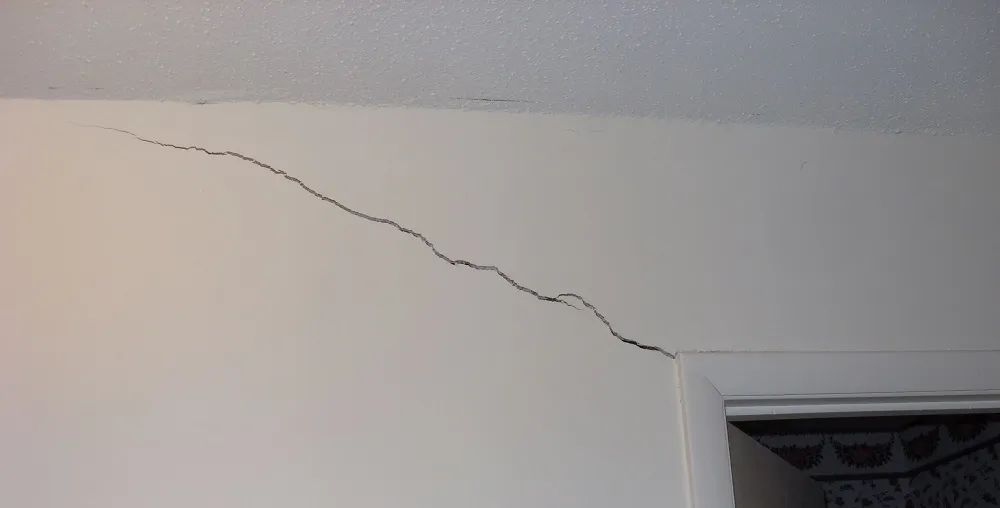
Myth: “Cracks in the drywall always mean foundation failure.” Correction: Most homes experience “Seasonal Cycling” or “Thermal Expansion” that causes minor cosmetic cracking. A professional assessment distinguishes these from structural failures.
-
Myth: “You should always lift the house back to perfectly level.” Correction: In older homes, the structure has “Settled” into its shape. Lifting it back to level can shatter the plumbing and the roof. Often, “Stabilization” (stopping the movement) is safer than “Correction” (reversing the movement).
-
Myth: “The pier with the highest weight capacity is the best.” Correction: If the concrete footing is weak, a high-capacity pier will simply “Punch through” the slab like a nail through cardboard. The system is only as strong as its weakest link.
-
Myth: “Tree roots push the foundation up.” Correction: It is usually the opposite. Roots remove the water, causing the soil to shrink and the foundation to sink.
Conclusion Common Foundation Repair Mistakes
Addressing the stability of a structure requires a transition from a “Fix-It” mentality to an “Investigative” one. By prioritizing independent engineering, comprehensive water management, and deep-strata anchoring, property owners can protect their most significant assets from the relentless dynamics of the earth. A foundation repair is not merely a construction project; it is a permanent alteration of the building’s relationship with its environment—one that demands technical precision, intellectual honesty, and long-term stewardship.
Leave a Reply