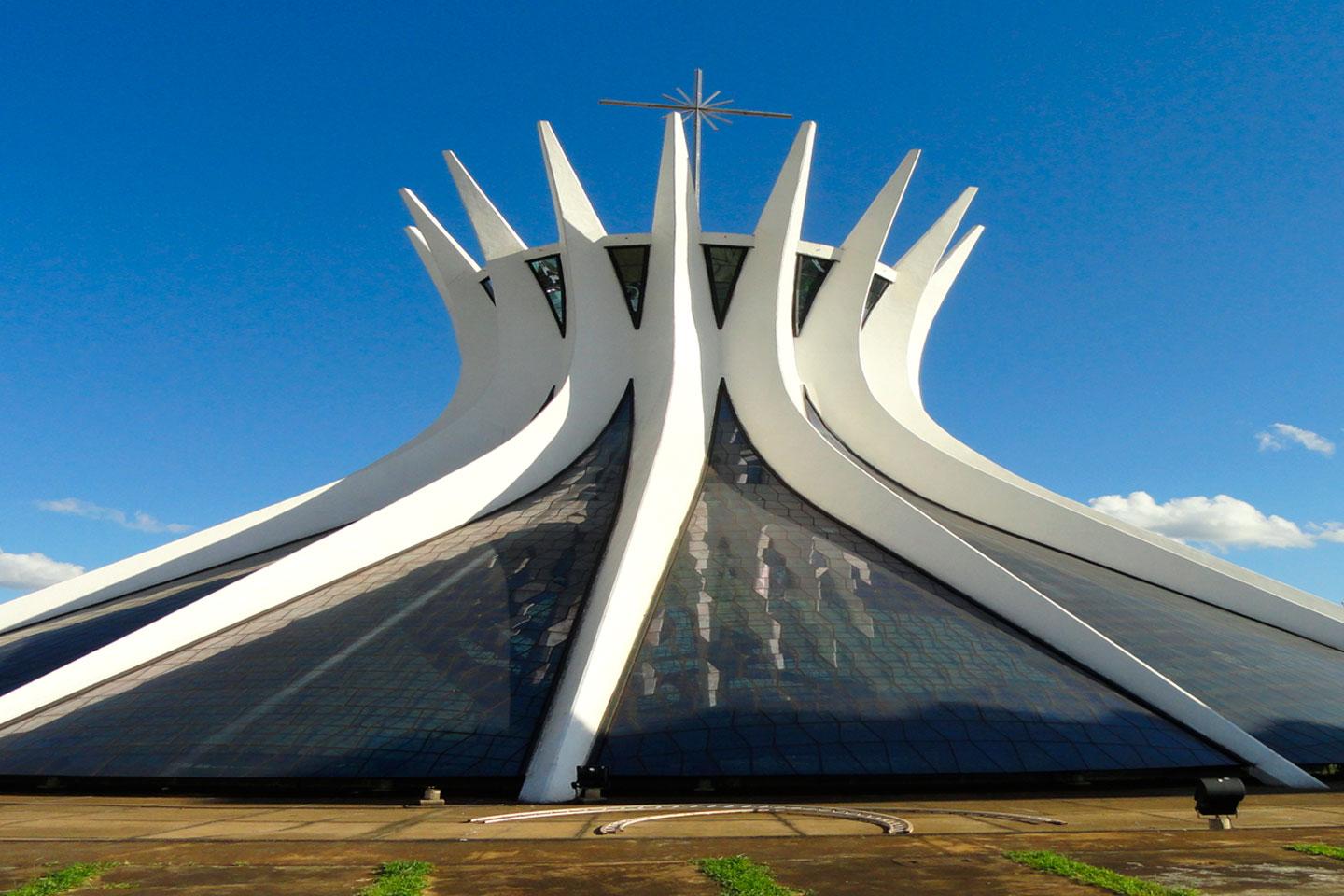
Best modern architecture united states modern architecture in the United States is frequently reduced to a collection of iconic silhouettes—the soaring spire of the Chrysler Building, the horizontal grace of Fallingwater, or the monolithic minimalism of the Seagram Building. Yet, to understand the best modern architecture united states offers, one must look past the aesthetic “skin” and into the structural and philosophical skeletal systems that define these works. We are currently navigating a second “Modernist Pivot,” where the original tenets of the 20th century—functionality, industrial materiality, and the rejection of ornament—are being hybridized with 21st-century imperatives like regenerative ecology and digital structural optimization.
The trajectory of American modernism is not a straight line but a series of reactive waves. It began as an import of European radicalism, was distilled through the pragmatic lens of American industrialism, and eventually fractured into the diverse sub-movements we see today, from Brutalism to High-Tech and Neo-Futurism. This evolution reflects a broader cultural shift in how Americans perceive their relationship with the built environment: moving from an era of “Conquering Nature” through steel and glass to an era of “Integrating with Nature” through biophilic design and carbon-sequestering materials.
As we evaluate the current landscape, the criteria for “excellence” have moved. It is no longer enough for a building to be visually arresting or structurally daring. The premier architectural assets of the modern era are now judged by their “Systemic Performance”—their ability to contribute to the power grid, manage their own waste, and adapt to shifting social needs without requiring demolition. This article interrogates the historical foundations, technical frameworks, and emerging risks that define the vanguard of American modernism.
Understanding “best modern architecture united states”
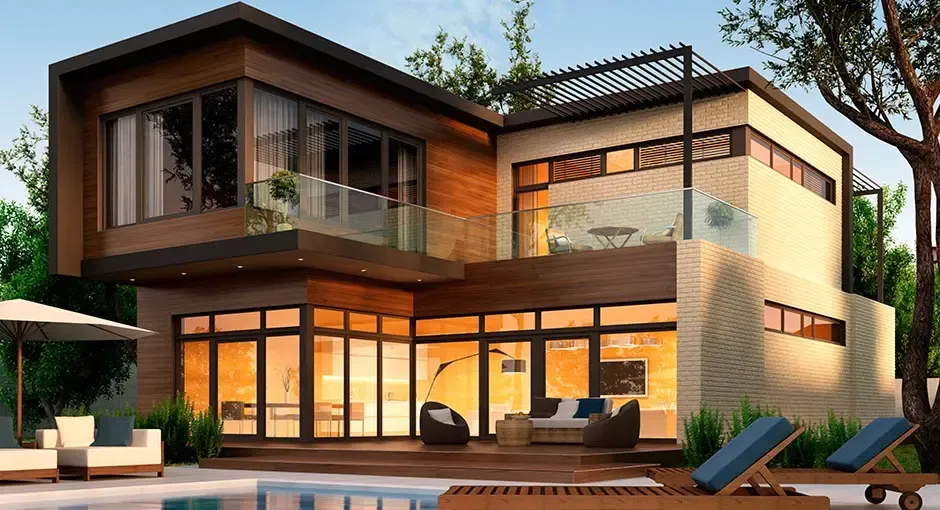
The phrase best modern architecture united states encompasses a spectrum of design that is often oversimplified. A common misunderstanding is that “Modern” is a synonym for “Contemporary.” In architectural discourse, “Modernism” refers to a specific period and set of principles (roughly 1920s–1970s), while “Contemporary” refers to the architecture of the present moment. However, the most successful contemporary works are those that iterate on the core “Modernist” DNA—the honest expression of materials and the prioritization of volume over mass.
A multi-perspective view reveals that “top-tier” architecture is a negotiation between three competing forces: Structural Purity, Contextual Sensitivity, and Functional Longevity. The oversimplification risk lies in valuing a building solely for its “Gegenstand” or object-like quality. A skyscraper might be a masterpiece of engineering but a failure in urbanism if it creates wind tunnels or “dead zones” at the street level.
Furthermore, we must account for the “Vernacular Divergence.” Modernism in the United States is not a monolith; the “Best” examples in the Pacific Northwest (which prioritize timber and light) are fundamentally different from those in the Desert Southwest (which focus on thermal mass and shading). True architectural mastery in the American context is found in the ability to apply universal modernist principles to highly specific local topographies and climates.
Deep Contextual Background: The Systemic Evolution
Best modern architecture united states the arrival of the “International Style” in the 1930s marked the first major disruption in American building history. Pioneered by European émigrés like Mies van der Rohe and Walter Gropius, this style introduced the “Curtain Wall”—a non-structural exterior skin of glass and steel that allowed for the “Free Plan.” This decoupled the interior layout from the exterior walls, a revolution that paved the way for the open-office landscapes and floor-to-ceiling vistas we now take for granted.
By the mid-20th century, the United States became the global epicenter for modernist experimentation. The “Case Study House” program in California demonstrated how industrial materials could create affordable, elegant residential life. Meanwhile, the rise of “Corporate Modernism” in cities like New York and Chicago redefined the skyline as a landscape of rationalist efficiency.
However, the 1970s brought a “Critical Correction.” The starkness of pure modernism led to a Post-Modernist rebellion that reintroduced historical motifs. Today, the “Best” modern architecture represents a synthesis: it retains the technical precision and material honesty of early modernism but adds a layer of “Environmental Intelligence” that was missing in the era of cheap energy.
Conceptual Frameworks and Mental Models Best Modern Architecture United States
The “Form Follows Function” (Revised) Model
The original Miesian mantra is now being interpreted as “Form Follows Performance.” The shape of a building is no longer just about its internal use but its external impact—how it directs wind to turbines, captures rainwater, or mitigates the urban heat island effect.
The “Bento Box” Modular Framework
Modern architecture increasingly utilizes the mental model of the “Bento Box”—designing buildings as a collection of independent, interchangeable modules. This allows for parts of a building to be upgraded (e.g., the HVAC system or the facade) without disturbing the structural whole.
The “Biophilic” Mental Model
This framework posits that humans have an innate need to connect with nature. The best modern designs in the US now integrate “Living Systems”—green walls, natural ventilation, and daylighting—not as ornaments, but as essential infrastructure for the health of the occupants.
Key Categories and Architectural Typologies
Modernism in America is categorized by its response to material and scale. The following table outlines the primary typologies and their inherent trade-offs.
Realistic Decision Logic
When commissioning or evaluating best modern architecture united states, the decision logic has shifted toward “Tectonics”—the art of construction. A project is deemed superior if its beauty is derived from how it is put together (e.g., the precision of a steel joint) rather than what is applied to its surface (e.g., stone veneer). This “Truth to Materials” remains the gold standard for modernist integrity.
Detailed Real-World Scenarios Best Modern Architecture United States
The “Retro-Modernist” Adaptive Reuse
-
The Constraint: An abandoned mid-century industrial warehouse with a high-strength concrete frame.
-
The Problem: The building is thermally inefficient and lacks the “curb appeal” for modern luxury residential use.
-
The Intervention: Instead of demolition, the facade is “peeled back” and replaced with high-performance, double-skin glass. The original concrete ribs are left exposed, creating a “Modernist Loft” aesthetic.
-
Second-Order Effect: Saving the original concrete frame prevents the release of thousands of tons of embodied carbon that would occur in a new build.
The “Climate-Responsive” Public Institution
-
The Constraint: A museum in a high-humidity, hurricane-prone region (e.g., Florida).
-
The Problem: Standard modernist “Glass Boxes” would be energy disasters and safety risks.
-
The Solution: Utilizing “Parametric Shading”—a digitally designed series of louvers that move with the sun to provide 100% shade to the glass while maintaining views.
-
Failure Mode: If the mechanical louvers fail, the building becomes an oven. Therefore, the “Best” designs include a “Passive Backup” like thermal chimneys.
Planning, Cost, and Resource Dynamics
The financial profile of modern architecture is front-loaded. High-quality modernist projects require a “Technical Premium” for specialized glazing and structural precision.
Tools, Strategies, and Support Systems
-
BIM (Building Information Modeling): 3D digital environments where every pipe, wire, and beam is mapped to prevent “clashes” during construction.
-
Generative Design Algorithms: Software that can test thousands of structural variations to find the one that uses the least material for the most strength.
-
Photovoltaic Integration (BIPV): Solar cells that are built directly into the glass of a skyscraper’s windows.
-
Mass Timber Construction: Utilizing cross-laminated timber (CLT) to build high-rises that are actually more fire-resistant than steel.
-
Dynamic Glazing: Glass that tints automatically based on the intensity of the sun, reducing cooling loads.
-
Seismic Dampers: “Shock absorbers” for buildings in high-risk zones like San Francisco or Seattle.
Risk Landscape and Failure Modes Best Modern Architecture United States
-
The “Glass Box” Trap: Relying too heavily on glass without proper shading, leading to massive HVAC costs and “glare zones” that make the interior unusable.
-
Material Obsolescence: Using “Proprietary Systems” (like custom-made window gaskets) that cannot be repaired or replaced 20 years later when the original manufacturer goes out of business.
-
Maintenance Debt: Modernist buildings with flat roofs and exposed concrete are prone to water infiltration. If a “Deferred Maintenance” cycle begins, the structural decay is often more rapid than in traditional buildings.
Governance, Maintenance, and Long-Term Adaptation
A modern masterpiece is only as good as its maintenance protocol. Unlike a stone cathedral, a glass-and-steel tower is a “Mechanical Object” that requires tuning.
Layered Maintenance Checklist:
-
Quarterly: Inspection of expansion joints and sealant integrity to prevent thermal bridging.
-
Annually: Calibration of smart-building sensors (CO2, lighting, and occupancy).
-
5-Year Cycle: Deep cleaning and “Refurbishment” of exterior metal finishes to prevent corrosion.
-
20-Year Cycle: Total replacement of the “Mechanical Heart” (HVAC units) to take advantage of new energy technologies.
Measurement, Tracking, and Evaluation Best Modern Architecture United States
Evaluating the best modern architecture united states requires looking at data over time.
-
Leading Indicators: “Visual Comfort Scores” (glare and light distribution); “Acoustic Attenuation” (how well the building blocks city noise).
-
Lagging Indicators: Energy Use Intensity (EUI); tenant retention rates; resale value compared to nearby traditional structures.
-
Documentation Examples:
-
Post-Occupancy Evaluation (POE): Surveys given to people living or working in the building to see if the “Design Intent” matches their actual experience.
-
LCA (Life Cycle Assessment): A document that calculates the total environmental impact of the building from “Cradle to Grave.”
-
Common Misconceptions and Oversimplifications
-
Myth: “Modern buildings are all cold and sterile.” Correction: The “Best” modern architecture uses “Warm Materials” like white oak, bronze, and textured stone to create high-tactility environments.
-
Myth: “Concrete buildings (Brutalism) are ugly and cheap.” Correction: High-quality concrete is one of the most difficult and expensive materials to master, requiring “Artisan Formwork” and precise chemical mixes.
-
Myth: “Glass skyscrapers are bird-killers.” Correction: Modern “Bird-Safe Glass” uses UV-reflective patterns that are visible to birds but invisible to humans.
-
Myth: “Flat roofs always leak.” Correction: While they require better drainage engineering, a well-designed flat roof provides “Usable Urban Land” for gardens and social spaces.
Conclusion Best Modern Architecture United States
The pursuit of the best modern architecture united states offers is ultimately a pursuit of “Structural Integrity.” We have graduated from an era of purely visual modernism into an era of “Functional Modernism.” The most significant works of the next decade will not be the loudest ones, but the ones that solve for the “Trifecta of Urbanism”: density without congestion, luxury without waste, and technology without complexity. The American architect today is less of a sculptor and more of a “Systems Orchestrator,” ensuring that the dialogue between glass, steel, and the human spirit remains as vibrant as it was in the days of the early pioneers.
Leave a Reply