How to avoid zoning risk the acquisition of real estate is often viewed through the lens of physical inspection and financial underwriting, yet the most profound threats to a project’s viability are frequently invisible. Zoning and land use regulations represent a complex overlay of municipal intent, legal precedent, and community sentiment. For the institutional developer or the sophisticated private investor, a parcel of land is not merely a geometric coordinate; it is a “bundle of rights” that is constantly subject to the shifting tides of local governance. When these rights are misunderstood or poorly defended, the resulting friction can lead to catastrophic capital erosion.
Zoning risk is essentially the delta between a project’s intended utility and the legal reality of what the local jurisdiction will permit. This risk is rarely binary. It exists on a spectrum ranging from administrative hurdles—such as minor setback variances—to fundamental “use” prohibitions that can render a multi-million dollar acquisition obsolete. In an era of increasing urban density and heightened environmental scrutiny, the regulatory landscape is more volatile than it has been in decades. Navigating this environment requires a transition from reactive compliance to proactive, strategic entitlement management.
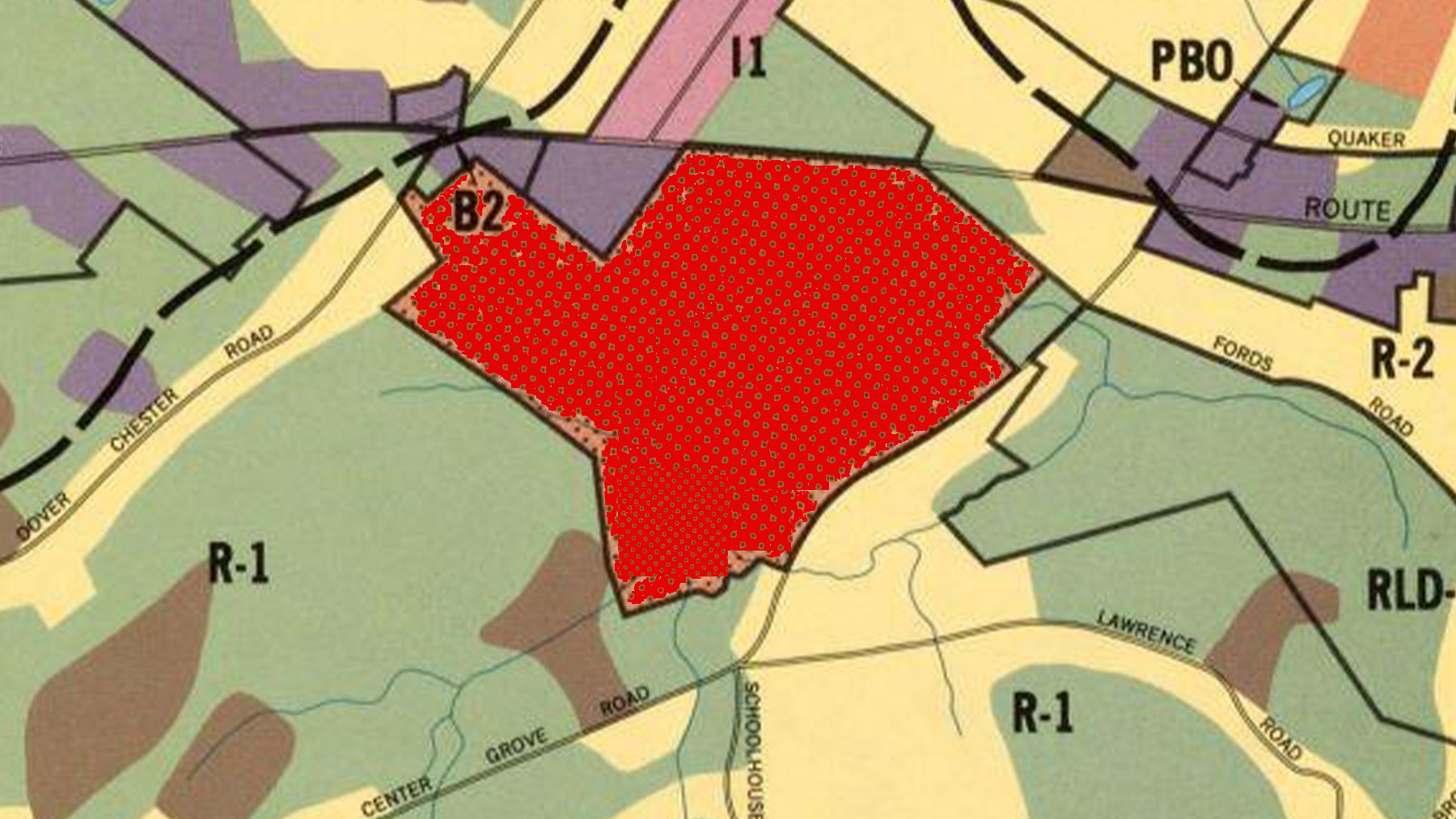
To insulate an investment from regulatory shock, one must move beyond the surface-level reading of a zoning map. The “map” is a static representation of a dynamic, political process. True mastery of the field involves an interrogation of the comprehensive plan, an understanding of the prevailing political climate in the planning department, and the ability to forecast how emerging social trends—such as the “YIMBY” movement or transit-oriented development mandates—will alter the local code. This editorial serves as an authoritative dissection of the mechanics of land use, providing a rigorous framework for those tasked with the stewardship of complex real estate assets.
Understanding “how to avoid zoning risk”
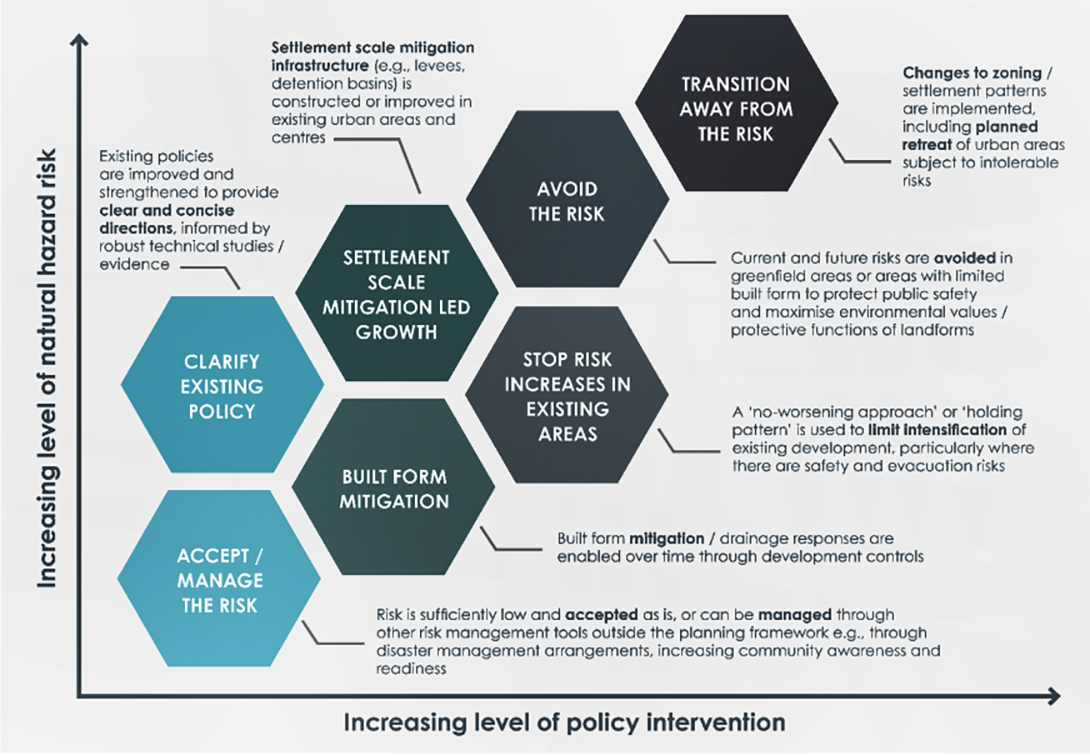
Developing a strategy for how to avoid zoning risk requires an admission that the local code is a living document, subject to interpretation and political whim. A common misunderstanding among less experienced investors is the belief that “By-Right” development—developing according to existing code without seeking variances—is a guarantee of safety. In reality, even By-Right projects can be derailed by “Administrative Discretion,” where city officials apply subjective standards to design reviews, landscaping requirements, or traffic impact studies. The risk is not just in what the law says, but in how it is applied by the individuals sitting behind the municipal desk.
A multi-perspective analysis reveals that zoning risk often hides in the “Conditionality” of a site. Many parcels are subject to “Conditional Use Permits” (CUPs) or “Special Exceptions.” These are not permanent entitlements; they are temporary permissions that can be revoked or conditioned upon expensive, ongoing performance standards. The oversimplification risk here is treating a CUP as a permanent asset. Sophisticated planners view these as “Fragile Rights” that require constant maintenance and political alignment.
Furthermore, we must address the “Timing of Vesting.” A critical component of how to avoid zoning risk is knowing exactly when a project’s rights become “Vested”—the point at which the city can no longer change the rules on you. In many jurisdictions, rights do not vest until a building permit is issued and “substantial work” has commenced. If a city council passes a restrictive down-zoning ordinance while you are still in the design phase, your project could be rendered illegal overnight. Understanding the local “Vesting Statute” is the fundamental defensive maneuver in any land use strategy.
Contextual Background: The Evolution of Use Regulation
How to avoid zoning risk the American zoning system evolved from the 1926 Supreme Court case Village of Euclid v. Ambler Realty Co., which established the constitutional right of municipalities to segregate land uses to protect “public health, safety, and welfare.” This “Euclidean Zoning” focused on separation: residential away from industrial, retail away from residential. For decades, this created a predictable, if rigid, framework for development.
However, the late 20th and early 21st centuries have seen a shift toward “Form-Based Codes” and “Performance Zoning.” These modern frameworks care less about what happens inside the building and more about how the building interacts with the street. This shift has introduced a new layer of risk: “Subjective Aesthetic Review.” Developers who are used to rigid Euclidean rules often struggle with these new, more fluid systems where a planning commission can reject a project simply because the facade “doesn’t fit the neighborhood character.” This transition marks the move from “Technical Compliance” to “Cultural Alignment” in the entitlement process.
Conceptual Frameworks and Mental Models How To Avoid Zoning Risk
To analyze a site’s regulatory potential, professionals utilize several diagnostic mental models:
The “Inherent vs. Conferred” Rights Model
This framework distinguishes between what the land allows naturally (Inherent) and what the city must grant you through a discretionary process (Conferred). If a project relies heavily on Conferred rights (variances, re-zonings), the risk profile increases exponentially. A “Low-Risk” project is one where 90% of the value is derived from Inherent rights.
The “Political Path of Least Resistance”
Zoning is a political act. This model encourages developers to map the stakeholders: Who loses if this project is built? Who wins? If the “losers” (e.g., organized neighborhood groups) have more political capital than the “winners” (e.g., local labor unions or tax-hungry council members), the zoning risk is high, regardless of the project’s technical merit.
The “Option Value” of Land
In finance, an option gives you the right but not the obligation to do something. Land should be viewed as a “Bundle of Options.” A site that is zoned for “Mixed-Use” has higher option value than one zoned strictly for “Commercial Office,” as it allows the developer to pivot the project if the market shifts. Diversity of use is the ultimate hedge against both market and zoning risk.
Key Categories of Regulatory Constraints
Regulatory risks typically fall into several distinct silos, each requiring a different mitigation strategy.
Realistic Decision Logic
When evaluating a parcel, the decision logic must be: “Is the ‘Entitlement Premium’ (the increase in value after getting approvals) worth the ‘Entitlement Burn’ (the cost of consultants, lawyers, and time)?” If a project requires a “General Plan Amendment,” the timeline is likely 24–36 months with a 50% chance of failure. If it is “By-Right,” the timeline is 6–9 months with a 95% chance of success. The “Zoning Risk” is the mathematical probability of that failure.
Detailed Real-World Scenarios How To Avoid Zoning Risk
The “Down-Zoning” Surprise
-
The Constraint: An investor buys a 2-acre lot zoned for 50 units of multi-family housing. During the due diligence period, the city initiates a “Comprehensive Plan Update.”
-
The Failure Mode: The city changes the zoning to “Single-Family Residential,” reducing the density from 50 units to 8.
-
Second-Order Effect: The land value drops by 70%, and the investor’s acquisition loan is called by the bank due to a collateral shortfall.
-
Prevention: Including a “Zoning Contingency” in the purchase agreement that allows the buyer to back out if the zoning changes prior to closing.
The “Traffic Impact” Deadlock
-
The Constraint: A retail developer proposes a grocery store on a busy corner. The zoning is correct, but the “Traffic Impact Study” shows the store will “fail” the local intersection (Level of Service F).
-
The Result: The city demands the developer pay for a $2 million traffic signal and a new turn lane.
-
Decision Point: Does the developer pay the “Exaction” or abandon the site?
-
Logic: This is an “Infrastructure Constraint” masquerading as a zoning issue.
The “Neighborhood Opposition” Pivot
-
The Constraint: A developer seeks a minor variance for building height. A local neighborhood association organizes, claiming the height will “shadow” their gardens.
-
The Result: The Planning Commission, fearing a vocal voting bloc, denies the variance despite it being technically sound.
-
Second-Order Effect: The developer must re-design the building as a “stubby” structure with less efficient floor plates, increasing construction costs by 15%.
Planning, Cost, and Resource Dynamics
The “Cost of Entitlement” is a massive variable that must be budgeted with significant “Soft Cost” contingencies.
The “Cost of Carry”
Zoning risk is not just the risk of a “No”; it is the risk of a “Maybe” that takes three years. The “Cost of Carry” (interest on the land loan, taxes, and insurance) during a protracted zoning battle can often exceed the actual construction cost of the project. A $10 million land loan at 7% interest costs $700,000 per year just to hold. Every month of delay at the city planning counter is a $58,000 loss.
Tools, Strategies, and Support Systems How To Avoid Zoning Risk
To successfully navigate how to avoid zoning risk, developers utilize a sophisticated toolkit:
-
Zoning Contingency Clauses: Legal language in the land contract that ties the “Closing” to the “Issuance of Unappealable Entitlements.”
-
ALTA Surveys (with Zoning Endorsement): A high-level survey that confirms the building’s compliance with setbacks, height, and parking.
-
Community Benefit Agreements (CBAs): Proactive contracts with neighborhood groups where the developer provides a park or a community center in exchange for support at the planning commission.
-
Political Mapping: Identifying the “Key Influencers” in the municipal government—not just the elected officials, but the career staff who write the recommendations.
-
Environmental Site Assessments (ESA): Ensuring that “Zoning” isn’t blocked by a hidden environmental “taking.”
-
Transfer of Development Rights (TDR): Buying the “Air Rights” from a neighboring historic building to increase the density on your own site.
Risk Landscape and Failure Taxonomy
We must categorize zoning risks by their “Mitigability.”
-
Non-Mitigable Risks: A total “Use” prohibition (e.g., trying to build a gas station in a residential-only zone).
-
Fully Mitigable Risks: Setback issues that can be solved through “Superior Design” or minor variances.
A “Taxonomy of Regulatory Failure” often reveals that projects die because of “Process Fatigue.” The developer simply runs out of cash or patience before the city reaches a final decision. This is why “Time” is the most dangerous variable in the zoning equation.
Governance, Maintenance, and Long-Term Adaptation How To Avoid Zoning Risk
Zoning strategy doesn’t end when the permit is issued. Many entitlements come with “Conditions of Approval” that must be monitored for the life of the project.
Layered Entitlement Checklist:
-
Pre-Acquisition: Perform a “Zoning Audit” including a review of the “Table of Allowed Uses” and any “Overlay Districts” (e.g., an Airport Noise Overlay).
-
Post-Permit: Monitor the “Expiration Date” of the entitlements. If you don’t start construction by a certain date, the zoning rights may “Sunset.”
Measurement, Tracking, and Evaluation
-
Leading Indicators: The number of “Pre-Application Meetings” held with city staff; the “Sentiment Analysis” of neighborhood social media groups.
-
Lagging Indicators: The final “Yield” (units per acre) achieved vs. the initial underwriting; the total “Soft Cost” spend as a percentage of the land value.
-
Documentation Examples:
-
Zoning Verification Letter (ZVL): A formal document from the city confirming the current zoning and use.
-
Conditions of Approval (COA) Matrix: A spreadsheet tracking every promise made to the city (e.g., “Will plant 50 oak trees”).
-
Vesting Tentative Map: A document that freezes the rules in place for a set period.
-
Common Misconceptions and Oversimplifications How To Avoid Zoning Risk
-
Myth: “If the land is vacant and next to a store, I can build a store.” Correction: The “Adjacency Fallacy.” Zoning boundaries are often arbitrary and stop at a property line.
-
Myth: “I can just get a variance.” Correction: Legal “Hardship” is required for a variance. “I want to make more money” is not a legal hardship.
-
Myth: “The Mayor said he likes the project, so I’m safe.” Correction: The Mayor is one vote. The “Administrative Staff” can still kill a project through “Death by a Thousand Papercuts” in the technical review.
Ethical and Practical Considerations
There is an ethical dimension to “Zoning Arbitrage.” While how to avoid zoning risk focuses on asset protection, developers have a social responsibility to ensure their “Value Creation” doesn’t come at the expense of “Community Displacement” or “Environmental Degradation.” Practically, the most resilient developers are those who view the city as a “Partner” rather than an “Adversary.” A project that solves a municipal problem (e.g., providing a needed pedestrian connection) is much less likely to face zoning hurdles than one that merely maximizes profit.
Conclusion How To Avoid Zoning Risk
The mitigation of zoning risk is an exercise in “Regulatory Foresight.” It requires the ability to see the site not as it is, but as it could be within the constraints of a shifting legal and social framework. By employing a rigorous framework of due diligence, political mapping, and strategic contingencies, an investor can navigate the maze of municipal entitlements with confidence.
Leave a Reply