
Predictive maintenance IoT networks the shift from reactive repair cycles to proactive machine health monitoring represents one of the most significant structural changes in industrial operations since the introduction of the assembly line. Historically, maintenance was a binary discipline: an asset was either functioning or it was broken. This “Run-to-Failure” model, while simple, carries an immense hidden tax in the form of unscheduled downtime, expedited parts shipping, and cascading secondary damage. The emergence of high-fidelity sensor arrays and ubiquitous connectivity has replaced this guesswork with a continuous stream of empirical data, transforming the factory floor into a quantifiable ecosystem.
However, the transition to an instrumented environment is fraught with systemic complexity. It is not enough to simply “attach sensors” to a turbine or a conveyor belt. A truly resilient architecture requires a sophisticated integration of edge computing, low-latency communication protocols, and cloud-based analytical engines. We are seeing a move away from isolated data siloes toward unified networks that can contextualize a vibration spike in a motor against the ambient temperature of the facility and the current electrical load. This contextualization is the difference between a “False Positive” alarm and a critical intervention that saves a multi-million dollar asset.
The challenge for modern industrial leadership is to view these installations not as an IT project, but as a fundamental shift in “Operational Philosophy.” To manage a network of connected sensors is to manage the “Risk Profile” of the organization’s physical capital. This requires a deep understanding of the “Physics of Failure”—the specific mechanical and electrical degradation paths that a sensor is meant to detect. This article provides a comprehensive interrogation of the technical and strategic layers required to build and sustain a high-performance monitoring environment, moving beyond the industry buzzwords to examine the structural mandates of long-term mechanical reliability.
Understanding “Predictive Maintenance IoT Networks”
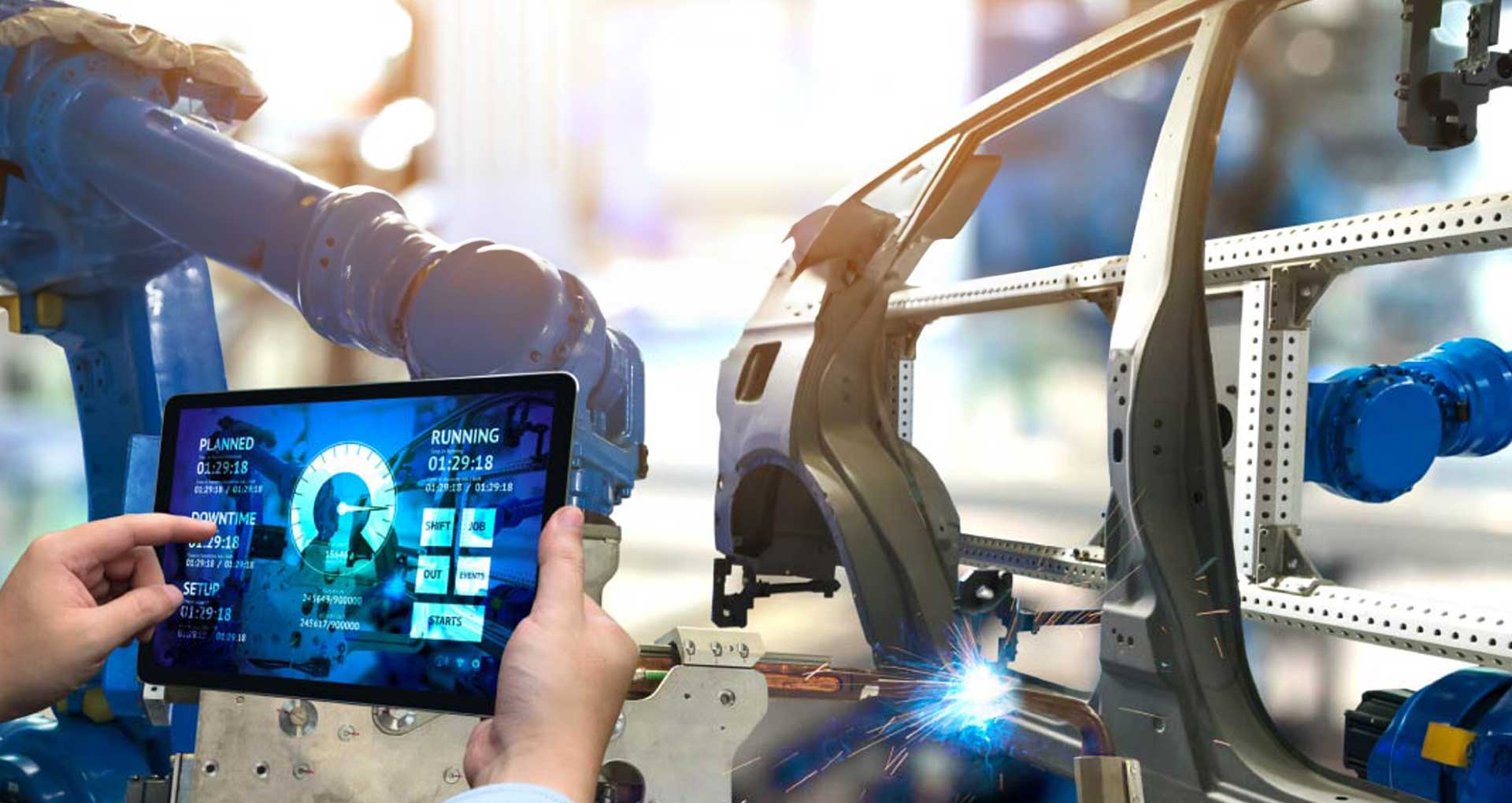
To define Predictive Maintenance IoT Networks is to describe a multi-layered communication architecture designed to capture, transmit, and interpret “High-Entropy” industrial data. A frequent misunderstanding is the conflation of “Remote Monitoring” with “Predictive Analysis.” Remote monitoring tells you that a machine is hot; predictive analysis uses the historical trend of that heat, combined with vibration and acoustic signatures, to forecast exactly when a bearing will seize. The “Network” element is critical because it provides the “Backbone” that ensures data integrity and arrival time, both of which are paramount when dealing with high-speed machinery.
The risk of oversimplification in this domain lies in ignoring the “Data Gravity” problem. In a large-scale facility, thousands of sensors generating data at kilohertz frequencies can easily overwhelm standard enterprise Wi-Fi. A sophisticated approach involves “Edge Intelligence,” where the sensor or a local gateway performs the initial Fourier Transform or anomaly detection, only sending “Alert-Relevant” packets to the cloud. This reduces the “Noise Floor” of the network and ensures that critical signals aren’t lost in a sea of baseline operational telemetry.
From a strategic perspective, Predictive Maintenance IoT Networks must be viewed as “Feedback Loops.” The value is not in the data itself, but in the “Decision Support” it provides to the maintenance crew. If the network identifies a misalignment in a pump, but the workflow for issuing a work order is disconnected from the sensor dashboard, the system has failed. Integration with Enterprise Asset Management (EAM) and Computerized Maintenance Management Systems (CMMS) is what converts a technical signal into a business outcome.
Deep Contextual Background: The Historical Evolution
Predictive maintenance IoT networks the journey toward predictive intelligence began with “Preventive Maintenance”—the practice of replacing parts based on a calendar or a set number of “Run Hours.” While an improvement over waiting for a breakdown, preventive maintenance is inherently wasteful. It leads to the “Early Replacement” of perfectly functional components, introducing the “Infant Mortality” risk where a new part fails shortly after installation due to manufacturing defects or improper fitting.
In the 1980s and 90s, “Condition-Based Maintenance” (CBM) introduced portable diagnostic tools. Technicians would walk the floor with handheld vibration pens or infrared cameras once a month. This “Snapshot” approach was better but suffered from “Intermittent Blindness.” If a fault developed on the second day of the month, it might go undetected until the next scheduled walk-through.
The current era, defined by Predictive Maintenance IoT Networks, solves the “Blindness” problem through “Continuous Vigilance.” The plummeting cost of MEMS (Micro-Electro-Mechanical Systems) sensors and the rise of “Low-Power Wide-Area Networks” (LPWAN) like LoRaWAN have made it economically viable to monitor even “Tier 2” and “Tier 3” assets that were previously ignored. We have moved from a “Scheduled Inspection” culture to an “Exception-Based” culture, where the machines effectively “call for help” only when they need it.
Conceptual Frameworks and Mental Models Predictive Maintenance IoT Networks
The “P-F Interval” Logic
This framework focuses on the time between a “Potential Failure” (P)—the point where a fault is first detectable—and the “Functional Failure” (F)—the point where the machine stops working. A robust IoT network aims to push the “P” detection as far back as possible using “Deep Feature Extraction” in the data, giving the maintenance team weeks or months of “Lead Time” rather than hours.
The “Asset Hierarchy” Framework
Not all machines are created equal. This model categorizes assets into “Critical,” “Essential,” and “Support.” Stabilization and monitoring resources are allocated based on the “Cost of Failure.” A critical turbine gets high-frequency, tri-axial vibration sensing with redundant power; a cooling fan might only get a simple temperature and current-draw sensor.
The “Digital Twin” Convergence
This mental model treats the IoT network as the “Sensory Input” for a mathematical model of the machine. By comparing the real-time sensor data against the “Ideal Physics” of the digital twin, the system can identify “Subtle Deviations” that wouldn’t trigger a standard threshold alarm but indicate a long-term efficiency decay.
Key Categories and Variations Predictive Maintenance IoT Networks
IoT architectures for maintenance vary significantly based on the “Physical Environment” of the facility.
Realistic Decision Logic
The “Physics of the Floor” dictates the tech stack. In a subterranean mine or a high-interference shipyard, a wired or LoRaWAN system is often the only choice. In a modern “Light Industrial” assembly plant, 5G or Wi-Fi 6 might provide the flexibility needed for reconfigurable production lines. The decision must be: “Can this protocol maintain signal integrity under the highest electromagnetic interference (EMI) our equipment generates?”
Detailed Real-World Scenarios Predictive Maintenance IoT Networks
The “Resonance” Detection
-
The Constraint: A high-speed paper mill where even a 5-minute stop ruins thousands of feet of product.
-
The Event: A tri-axial vibration sensor detects a “Spectral Peak” that doesn’t match standard bearing wear.
-
The Analysis: The network correlates the vibration with a change in the mill’s speed, identifying a “Structural Resonance” that would have cracked the machine frame within 48 hours.
-
The Fix: The system automatically limits the mill’s speed to a “Safe Zone” until a reinforcement bracket can be installed during a scheduled weekend stop.
The “Silent Leak”
-
The Constraint: A distributed compressed air system in an automotive plant.
-
Failure: Traditional pressure gauges show no issue, but the “Acoustic IoT” sensors detect high-frequency ultrasonic “hissing.”
-
Outcome: The network identifies 15 minor leaks that were collectively causing a 20% “Efficiency Tax” on the compressors.
-
Second-Order Effect: By fixing the leaks, the plant avoids the “CapEx” of buying an additional compressor to handle the perceived load.
Planning, Cost, and Resource Dynamics
The “Total Cost of Ownership” (TCO) for a maintenance network is often 3x the initial hardware price when factoring in installation and data management.
Tools, Strategies, and Support Systems
-
Automated Feature Engineering: Tools that automatically identify which sensor frequencies correlate most strongly with failure.
-
Edge Gateways: Local hardware that performs “Data Thinning” to save on cellular bandwidth and cloud storage costs.
-
Digital Thermography: Using IoT-enabled IR cameras to monitor electrical panels for “Hot Spots” caused by loose connections.
-
Oil Quality Sensors: Real-time analysis of “Ferrous Content” and acidity in lubrication systems, replacing quarterly manual samples.
-
Smart Ultrasonic Sensors: Detecting “Arcing” in high-voltage transformers before they explode.
-
Current Signature Analysis (MCSA): Using the electrical “Noise” of a motor to diagnose mechanical issues in the driven load.
-
Dynamic Thresholding: Algorithms that adjust “Warning” levels based on the current load and age of the machine.
Risk Landscape and Failure Modes Predictive Maintenance IoT Networks
A network designed to prevent failure can, itself, be a point of failure.
-
The “False Sense of Security” Trap: If the sensors are not calibrated or if the “Batteries” die without a notification, the maintenance team stops doing visual inspections, assuming the system will catch everything. This leads to “Catastrophic Surprise.”
-
The “Cyber-Physical” Threat: If an attacker gains access to the IoT network, they can “Mask” a real failure or trigger “Emergency Shutdowns” to cause economic damage.
-
“Alarm Fatigue”: A poorly tuned network that sends 50 “Minor Anomaly” emails a day will eventually be ignored by the human crew. A critical alert will then be missed.
Governance, Maintenance, and Long-Term Adaptation
A Predictive Maintenance IoT Networks installation is a “Living System” that requires its own maintenance schedule.
The “System Integrity” Checklist:
-
Sensor Calibration Audit: Yearly verification that a “10mm/s” vibration reading is actually 10mm/s.
-
Network Latency Test: Ensuring that “Critical Over-Temperature” alerts aren’t getting stuck in a gateway buffer.
-
Battery Replacement Cycle: For wireless nodes, a proactive 2-year or 5-year replacement plan based on actual discharge curves.
-
Model Retraining: As a machine is repaired or overhauled, its “Baseline” changes. The AI must be “Reset” to learn the new “Healthy State.”
Measurement, Tracking, and Evaluation Predictive Maintenance IoT Networks
-
Leading Indicators: “Mean Time to Detect” (MTTD); “Prediction Accuracy” (Percentage of alerted faults that were real).
-
Lagging Indicators: “Reduction in Unscheduled Downtime”; “Overall Equipment Effectiveness” (OEE).
-
Documentation Examples:
-
The “Failure Fingerprint” Library: A historical record of the specific sensor patterns that preceded past breakdowns.
-
The “Cost Avoidance” Log: A report showing the estimated repair cost of a breakdown vs. the actual cost of the predictive intervention.
-
Common Misconceptions and Oversimplifications
-
Myth: “AI can predict any failure.” Correction: AI can only predict failures that have “Detectable Precursors.” A sudden “Snap” of a bolt due to an over-torque event is often invisible to sensors until it happens.
-
Myth: “More data is always better.” Correction: High-frequency raw data is expensive to store and process. “Smart Data”—summarized at the edge—is far more valuable.
-
Myth: “IoT replaces the maintenance technician.” Correction: IoT empowers the technician. It tells them where to go and what tools to bring, but the physical repair still requires human judgment.
-
Myth: “Wireless is unreliable in factories.” Correction: With modern “Frequency Hopping” and “Mesh Protocols,” wireless can exceed 99.9% reliability in even the most challenging metal-heavy environments.
Ethical and Practical Considerations Predictive Maintenance IoT Networks
The deployment of pervasive sensing raises questions about “Workplace Monitoring.” While the intent is to monitor the machine, the data inevitably reveals the “Work Patterns” of the operators. This requires a clear governance policy: the data should be used to improve “Machine Performance,” not to penalize an operator for taking a longer break. Transparency in “Data Intent” is critical for maintaining the “Social Contract” on the shop floor.
Conclusion
The architecture of Predictive Maintenance IoT Networks represents the “Final Maturation” of industrial automation. By closing the gap between physical reality and digital awareness, organizations can finally escape the “Cycle of Crisis” that has characterized maintenance for a century. This transition is not instantaneous; it requires a patient, layered approach to data integrity, network resilience, and cultural adaptation. However, the result—a facility that is self-aware, predictable, and fundamentally more efficient—is the prerequisite for any enterprise seeking to lead in a hyper-competitive, resource-constrained global economy.
Leave a Reply