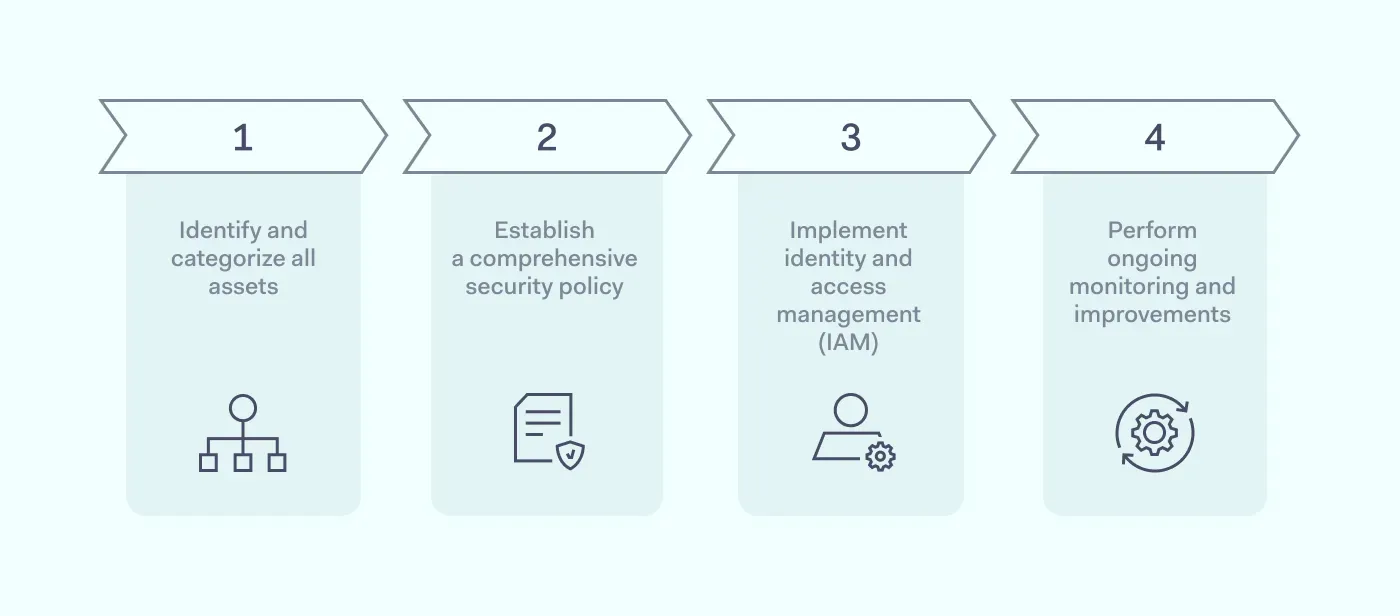
Identity-first zero trust security the traditional network security model, centered on the “castle-and-moat” philosophy, has reached a point of systemic obsolescence. For decades, cybersecurity was synonymous with network hardening—assuming that anyone inside the corporate firewall was trustworthy and anyone outside was a threat. However, the mass migration to cloud-native architectures, the proliferation of unmanaged personal devices, and the normalization of remote work have dissolved the physical and digital boundaries that once defined the enterprise. When the workforce, the data, and the applications exist everywhere, the network itself becomes an unreliable metric for safety.
In this boundaryless environment, the focus has shifted from protecting “where” someone is to verifying “who” someone is. This evolution marks the transition from network-centric defenses to a philosophy where the individual’s identity is the primary control plane. It is no longer sufficient to secure the pipe; one must secure the entity flowing through it. This shift is not merely a technical upgrade but a fundamental reimagining of the trust relationship between the user, their device, and the corporate resource.
Implementing this philosophy requires moving beyond simple passwords or static multi-factor authentication. It demands a continuous, contextual interrogation of every request, regardless of its origin. As we navigate an era of increasingly sophisticated social engineering and credential-based attacks, the ability to establish a high-assurance, dynamic identity is the only viable path to long-term resilience. This article interrogates the structural mandates of this transition, moving beyond the industry buzzwords to examine the deep engineering and strategic rigor required to sustain a truly resilient, decentralized security posture.
Understanding “Identity-First Zero Trust Security”
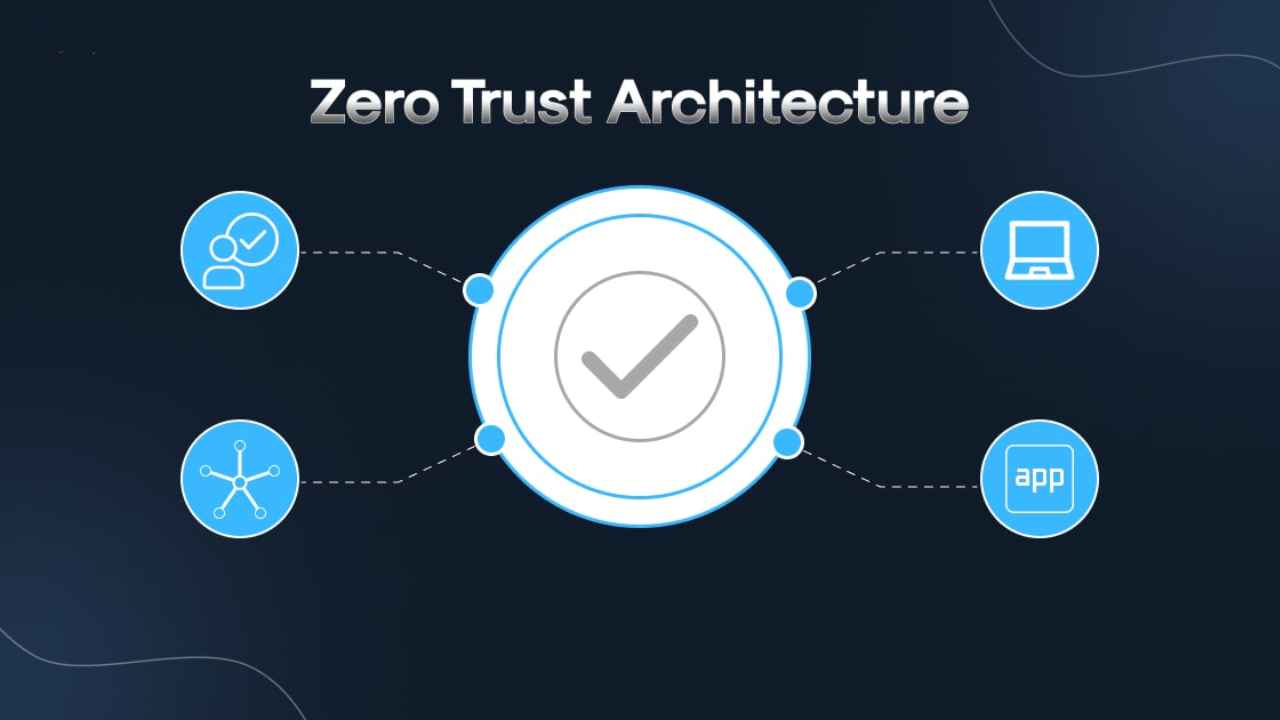
To define Identity-First Zero Trust Security is to describe a system where the “Identity” of the requester serves as the foundational unit of all security decisions, preceding network connectivity or device health. A common misunderstanding in the IT sector is that Zero Trust is a product one can purchase; in reality, it is a strategic framework where “Assume Breach” and “Verify Explicitly” are the operating mandates. In an identity-first model, the enterprise treats identity as the new perimeter—a portable, cryptographic boundary that follows the user across different networks, locations, and cloud providers.
Oversimplification in this domain often leads to “MFA Fatigue” or a false sense of security derived from basic Single Sign-On (SSO). True Identity-First Zero Trust Security incorporates “Contextual Signals”—such as geolocation, time-of-day, behavioral biometrics, and device security posture—to create a risk-weighted score for every access attempt. If a user typically accesses financial records from New York at 9:00 AM on a MacBook, a request from London at 3:00 AM on a Windows machine will trigger an immediate re-authentication or denial, even if the credentials are correct.
From a multi-perspective view, the architecture must balance “Friction” with “Security.” For the developer, security must be invisible; for the security architect, it must be absolute. The risk of treating identity as a static attribute is that it ignores the “Temporal Nature of Trust.”
Deep Contextual Background: The Erosion of Implicit Trust
Identity-first zero trust security the journey toward identity-centric security began with the failure of the Virtual Private Network (VPN). This “Implicit Trust” became the primary vector for lateral movement during major data breaches in the early 2100s, as attackers realized that compromising a single set of credentials granted them the keys to the entire kingdom.
The emergence of the Google-pioneered “BeyondCorp” model in the mid-2010s was the first major pivot away from the network. This was the nascent stage of the identity-first movement. Today, we have entered the “Maturity Phase,” where identity is no longer just about people; it includes “Non-Human Entities” (NHEs) such as service accounts, bots, and IoT devices, which often outnumber human users in modern cloud environments by a factor of 10 to 1.
Conceptual Frameworks and Mental Models Identity-First Zero Trust Security
The “Identity-as-the-Micro-Perimeter” Framework
This model treats every individual application or data bucket as if it were a standalone castle. The “Moat” is no longer around the office building; it is around the specific piece of data. Identity is the only “Drawbridge.”
The “Continuous Adaptive Risk and Trust Assessment” (CARTA)
Proposed by industry analysts, this model suggests that security is a continuous loop. We start with “Initial Authentication,” move to “Continuous Monitoring,” then to “Behavioral Analysis,” and finally to “Response.” This model rejects the “Binary” view of security (Locked vs. Unlocked) in favor of a “Spectrum” of trust that fluctuates based on real-time data.
The “Entitlement Graph” Model
This mental model views the enterprise as a massive web of connections between users and resources. “Identity-First” means managing the “Edges” of this graph. Over time, “Entitlement Creep” occurs as users change roles but keep their old permissions.
Key Categories and Variations
Identity-centric architectures vary based on the “Class of Entity” being secured.
Realistic Decision Logic
The decision to implement specific controls is governed by the “Value of the Resource.” A “Public-Facing Document” might only require a standard SSO check. However, a “Production Database” should require “Identity-First” protocols such as hardware-based keys and “Mutual TLS” (mTLS) where the machine must also prove its identity to the user.
Detailed Real-World Scenarios Identity-First Zero Trust Security
The “Session Hijack” in a Remote Environment
-
The Constraint: A marketing employee is working from a public café. Their session token is stolen via a sophisticated man-in-the-middle attack.
-
The Identification: The attacker attempts to use the stolen token from a different browser fingerprint.
-
The Identity-First Response: Because the system monitors “Context,” it notices the browser change and the sudden jump in “User-Agent” complexity. Instead of allowing the request, it invalidates the session and requires a fresh biometric re-authentication.
-
The Lesson: Credentials are not identity. Tokens are not identity. Contextual behavior is the only true validator.
The “Over-Privileged Service Account”
-
The Constraint: A legacy script on a server has “Full Admin” rights to the cloud storage to perform backups.
-
The Failure: The server is compromised. The attacker uses the script’s hardcoded credentials to delete the backups.
-
The Identity-First Fix: Moving to “Workload Identity Federation.” The script no longer has a password; instead, it must request a temporary “Short-Lived Token” based on its unique machine signature.
Planning, Cost, and Resource Dynamics
The transition to an identity-first model is a capital-intensive shift in “Process” more than “Software.”
Tools, Strategies, and Support Systems Identity-First Zero Trust Security
-
Identity Governance and Administration (IGA): The “Control Center” for the user lifecycle—managing how identities are created, moved, and deleted.
-
Passwordless Authentication: Utilizing the TPM (Trusted Platform Module) on modern laptops to replace passwords with cryptographic handshakes.
-
Cloud Infrastructure Entitlement Management (CIEM): Identifying “Hidden Permissions” in cloud environments (e.g., a user who has permission to change their own permissions).
-
Policy-as-Code (PaC): Writing access rules in a language like Rego (OPA) so they can be audited and version-controlled like software.
-
User and Entity Behavior Analytics (UEBA): The “Brain” that learns what “Normal” looks like for every identity to flag anomalies.
-
Customer Identity and Access Management (CIAM): Extending the same “Identity-First” rigor to external customers without ruining the “Sign-Up” conversion rate.
Risk Landscape and Failure Modes
Even an identity-first approach has “Structural Weak points.”
-
Identity Exhaustion: Forcing users to authenticate 50 times a day leads to “Approval Blindness,” where they click “Yes” on an MFA prompt just to make the notification go away.
-
Shadow Identity: Employees using personal accounts (e.g., using a personal Gmail to log into a corporate tool) creates a “Blind Spot” where the company has zero visibility into the access.
Governance, Maintenance, and Long-Term Adaptation Identity-First Zero Trust Security
Maintaining Identity-First Zero Trust Security requires a move away from “Annual Access Reviews” toward “Event-Driven Reviews.”
The “Identity Hygiene” Checklist:
-
Orphaned Account Scan: Automated weekly checks for accounts belonging to employees who have left the company.
-
“Least Privilege” Drift Audit: Monthly reports showing users who haven’t used specific permissions in over 90 days.
-
MFA Bypass Monitoring: Alerting whenever a user logs in via a “Break-Glass” or legacy protocol that bypasses the Zero Trust stack.
-
Scenario Testing: Quarterly “Red Team” exercises specifically targeting the IdP and the PAM vault.
Measurement, Tracking, and Evaluation
-
Leading Indicators: “Time to De-provision” (How long after a firing does access disappear?); “MFA Enrollment Percentage.”
-
Lagging Indicators: “Lateral Movement Success Rate” during security audits; “Mean Time to Detect” (MTTD) a credential-based attack.
-
Documentation Examples:
-
The “Blast Radius” Report: A map showing exactly what an attacker could see if “User X” was compromised.
-
The “Entitlement Lifecycle” Log: A full history of why every permission was granted and who approved it.
-
Common Misconceptions and Oversimplifications Identity-First Zero Trust Security
-
Myth: “MFA means I am doing Zero Trust.” Correction: MFA is just a credential. Zero Trust is the “Continuous Verification” of the entire context of the request.
-
Myth: “Zero Trust is only for remote workers.” Correction: Most catastrophic breaches happen because internal networks are too “Soft.” Zero Trust is just as critical for people sitting in the office.
-
Myth: “Identity-First is too expensive for small firms.” Correction: The “Cost of a Breach” far outweighs the cost of modern cloud-based IdP tools, many of which have free tiers for small teams.
-
Myth: “It stops all attacks.” Correction: It stops lateral movement. An attacker can still compromise one user, but they will be “Trapped” in that user’s limited view of the world.
Conclusion
The transition to Identity-First Zero Trust Security represents the “Final Divorce” of security from physical geography. By placing the individual at the center of the architecture, organizations can finally embrace the agility of the modern digital economy without sacrificing the integrity of their most sensitive data. This is not a “Project” with an end date; it is a permanent state of “Dynamic Skepticism.” As the tools of the adversary continue to evolve, our definition of “Identity” must become more granular, more contextual, and more cryptographic. The perimeter hasn’t disappeared; it has simply moved to the person.
Leave a Reply