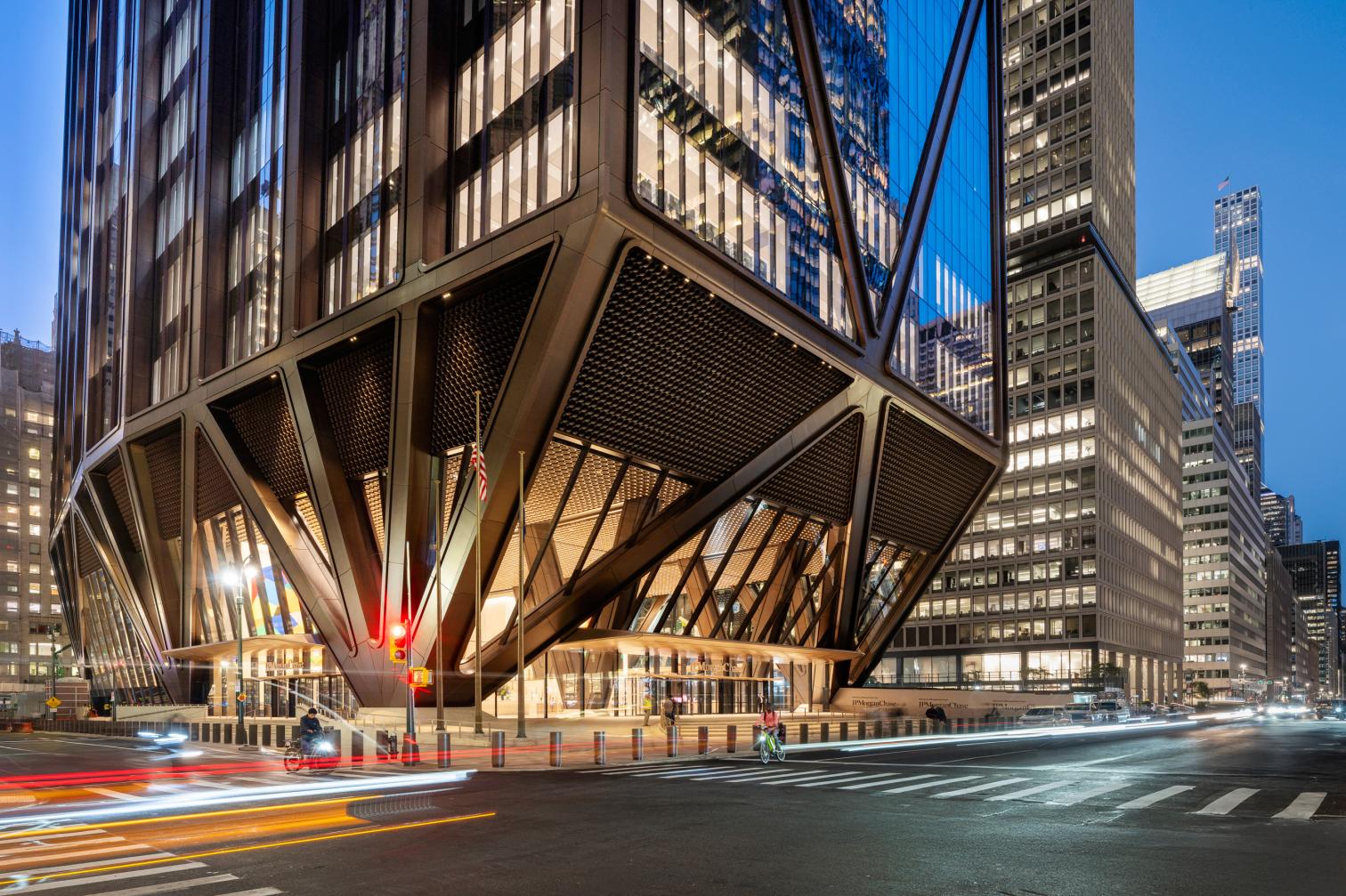
Top construction projects in america the American skyline is currently undergoing a structural transformation that mirrors the industrial shifts of the early 20th century, yet at a scale and technological density previously unimagined. We are no longer simply building “big”; we are building “smart” and “sovereign.” The modern construction cycle in the United States is characterized by a pivot toward domestic industrial resilience—specifically in semiconductors, renewable energy, and data infrastructure—interwoven with a massive federal push to modernize aging transportation networks.
The current landscape of top construction projects in america is defined by “Megaprojects,” ventures exceeding $1 billion that operate as semi-autonomous economic zones. These projects are not merely architectural feats; they are systemic responses to shifting global trade dynamics and the accelerating demands of artificial intelligence. In this environment, the “construction site” has evolved into a high-tech assembly floor where Virtual Design and Construction (VDC) and modular pre-fabrication are the baseline requirements for participation.
This article provides a rigorous, long-view analysis of these marquee developments. We will move beyond the headlines of “tallest” or “longest” to examine the second-order effects of these builds: how they reshape regional labor markets, strain global supply chains for specialized materials like low-carbon steel, and set new benchmarks for long-term structural governance.
Understanding “top construction projects in america”

To define the top construction projects in america requires a multidimensional lens. A common misunderstanding is that “top” refers solely to the height of a building or the total dollar value of a contract. In a professional editorial context, a project earns its “top” designation through Topical Gravity—its ability to influence the standards of the entire industry.
A project like the Intel “Silicon Heartland” in Ohio is a “top” project not just because of its $20 billion price tag, but because it necessitates the creation of a new specialized workforce and a bespoke logistics network for ultra-pure chemical delivery. Conversely, oversimplification occurs when analysts treat these projects as isolated events. In reality, they are “Clustered Ecosystems.” A single semiconductor fab project often triggers a secondary wave of housing, utility, and transportation construction that can triple the initial economic footprint.
Furthermore, we must recognize the “Technological Barrier to Entry.” Many of the most significant projects today are “Invisible Megaprojects”—massive data center campuses or underground utility tunnels that lack the visual prestige of a skyscraper but are far more critical to national systemic stability. Evaluating these projects requires looking past the concrete and steel to the digital and thermal infrastructure beneath.
Deep Contextual Background: The Third Industrial Build-Out
Top construction projects in america we are currently in what historians are beginning to call the “Third Industrial Build-Out” of the United States. The first was the post-Civil War railroad expansion; the second was the post-WWII interstate and suburban surge. This third wave is driven by “Onshoring” and “Decarbonization.”
Following decades of “Asset-Light” economic strategies, the 2020s marked a return to physical industrial capacity. This was codified by the CHIPS and Science Act and the Bipartisan Infrastructure Law, which injected hundreds of billions of dollars into the construction sector. This historical pivot has shifted the geographical center of construction gravity. While New York and Chicago remain active, the true “Frontier” of modern American construction has moved to the “Intermountain West” and the “Rust Belt 2.0,” where land and power are available to support the massive footprints of 21st-century manufacturing.
Conceptual Frameworks and Mental Models Top Construction Projects In America
The “Critical Path” Resilience Model
In megaprojects, the “Critical Path” is the sequence of stages that determines the minimum time needed for completion. Modern frameworks now add a “Resilience Buffer” to this path, accounting for the reality that specialized components—such as high-voltage transformers—now have lead times exceeding two years.
The “Asset Lifecycle” Framework
This model shifts the focus from “Completion” to “Total Cost of Ownership” (TCO). A project is evaluated by how easily it can be retrofitted or expanded 20 years from now. This is particularly relevant for data centers, where power density requirements double every few years.
The “Social License to Operate” (SLO) Model
Unlike 20th-century builds that could rely on eminent domain, today’s top projects require an SLO—a continuous negotiation with local communities regarding water usage, traffic, and environmental impact.
Key Categories: The Anatomy of Modern Growth
The current boom is segmented into several high-gravity sectors, each with distinct trade-offs in labor and material requirements.
Realistic Decision Logic
The selection of a site for a top construction project in america is no longer just about tax incentives. The “Decision Logic” is now dominated by “Power Certainty.” A state that can guarantee 500MW of reliable power within 36 months will beat a state with a lower tax rate every time. This has made utility companies the silent partners in modern megaproject planning.
Detailed Real-World Scenarios Top Construction Projects In America
The “Silicon Heartland” Logistics Chain
-
The Constraint: Moving 2,000-ton “super-loads” of manufacturing equipment through rural Ohio.
-
The Scenario: Intel’s Ohio fab requires the transport of equipment that exceeds the weight limits of existing bridges.
-
The Failure Mode: If the “Last-Mile” infrastructure isn’t reinforced before the equipment arrives, the project faces a “Stagnant Capital” risk where billion-dollar machines sit in ports while roads are rebuilt.
The “Zero-Tolerance” Cleanroom
-
The Constraint: Maintaining air purity 10,000 times cleaner than a hospital operating room during active construction.
-
The Decision Point: Choosing between traditional build or “Modular Cleanroom Pods.”
-
Second-Order Effect: The use of modular pods reduces on-site labor hours but increases the demand for high-precision VDC (Virtual Design and Construction) specialists to ensure the “Plug-and-Play” connections are perfect to the millimeter.
Planning, Cost, and Resource Dynamics
The cost structures of today’s top projects are volatile, driven by the “Megaproject Multiplier”—the phenomenon where the sheer size of a project creates its own local inflation.
Tools, Strategies, and Support Systems Top Construction Projects In America
-
Digital Twins (BIM Level 3): Creating a living digital model that tracks every pipe and wire in real-time, even after construction.
-
Autonomous Grading Equipment: Using GPS-guided bulldozers to achieve sub-centimeter accuracy without human intervention.
-
IoT Wearables: Tracking worker health and location to prevent “Heat Stress” and improve site safety in massive footprints.
-
Low-Carbon Cementitious Materials: Integrating fly ash or slag to meet federal “Buy Clean” mandates.
-
Predictive Scheduling AI: Systems that analyze weather patterns and shipping delays to suggest schedule adjustments before they become critical.
-
Off-Site Prefabrication: Moving dangerous or delicate assembly work from the job site to a controlled factory environment.
Risk Landscape and Systemic Failure Modes
-
The “Talent Gap”: The construction industry needs nearly 500,000 new workers in 2026. The biggest risk to top construction projects in america is not capital, but “Execution Capacity”—having enough skilled tradespeople to turn the drawings into reality.
-
Compounding Disruptions: A strike at a specific European port or a fire at a specialized chemical plant can stall 20 different U.S. megaprojects simultaneously due to the “Just-in-Time” nature of specialized components.
-
Permitting Paralysis: Even with federal backing, projects can be “Delayed to Death” by local environmental reviews and zoning litigation.
Governance and Long-Term Adaptation Top Construction Projects In America
A megaproject is not “finished” when the ribbon is cut; it begins its most expensive phase: operations.
The “Layered Governance” Checklist:
-
Structural Health Monitoring (SHM): Embedded sensors in bridges and foundations to detect micro-cracks before they are visible.
-
Review Cycles: Mandated “Tech Refresh” audits every 36 months for data and industrial facilities to ensure the infrastructure can handle new equipment loads.
-
Adaptive Landscaping: Using indigenous vegetation to manage massive runoff from the literal acres of roof space created by gigafactories.
Measurement and Evaluation Metrics
-
Leading Indicators: “Rework Percentage” (how much of the work has to be redone due to errors). A rework rate below 2% is a signal of high-level VDC mastery.
-
Lagging Indicators: “Asset Utilization Rate”—how quickly the facility reaches its intended production capacity post-handover.
-
Documentation: The “Digital O&M Manual,” a searchable, linked database of every component’s warranty and maintenance history.
Common Misconceptions and Oversimplifications Top Construction Projects In America
-
Myth: “Everything is being built with robots now.” Correction: While automation is rising, the “Last 10%” of any project requires highly nuanced human judgment and manual dexterity.
-
Myth: “Federal funding means the project is guaranteed.” Correction: Federal money often comes with “Strings” (labor rules, sourcing requirements) that can actually slow down a project if not managed perfectly.
-
Myth: “The most expensive project is the most important.” Correction: The “Most Important” projects are often the connectors—the transmission lines and pipelines that allow the billion-dollar factories to actually function.
Conclusion
The current era of top construction projects in america represents a return to “High-Physicality” economic strategy. We are building the foundations for a century defined by semiconductor sovereignty and energy transition. However, the success of these builds will not be determined by the amount of concrete poured, but by the intelligence of the systems integrated into that concrete. The true “authority” in modern construction lies in the ability to manage the intersection of physical labor, digital modeling, and long-term ecological stewardship.
Leave a Reply