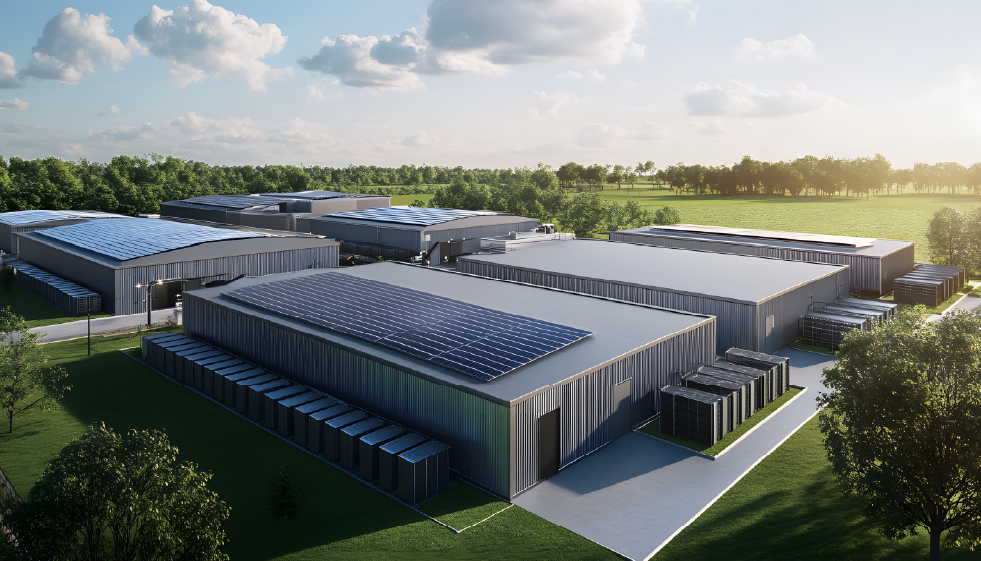
AI-ready datacenter architecture the transition from general-purpose cloud computing to accelerated, large-scale machine learning has precipitated a fundamental crisis in physical infrastructure. For decades, the datacenter was a temple of “Commodity X86” architecture—racks of servers designed for high-availability web hosting, database management, and enterprise virtualization. These facilities optimized for moderate power density, air-cooled thermal management, and standard Ethernet networking. However, the emergence of transformer models and high-parameter neural networks has rendered this traditional blueprint obsolete. We are no longer managing distributed workloads; we are engineering massive, monolithic computational clusters that behave as a single, unified organism.
The shift toward specialized infrastructure is not merely an incremental upgrade but a structural revolution. Where a standard enterprise rack might consume 5 to 10 kilowatts (kW), a modern cluster optimized for training Large Language Models (LLMs) can easily demand 50 to 100 kW per rack. This ten-fold increase in power density creates a “Thermal Wall” that air-cooling cannot penetrate, necessitating a pivot toward liquid-to-chip cooling technologies. Furthermore, the networking requirements have shifted from the North-South traffic patterns of the internet to the East-West “All-to-All” communications required for gradient synchronization across thousands of GPUs.
This evolution demands a new philosophy of design: the creation of a high-density, low-latency, and thermally resilient environment. To build for the future is to acknowledge that the “Average” datacenter is now a bottleneck. Achieving a truly “AI-ready” state requires a total reimagining of the power chain, the cooling loop, and the network fabric. This article serves as an editorial interrogation of those systems, moving beyond the industry hype to examine the technical frictions and structural mandates of next-generation infrastructure.
Understanding “AI-Ready Datacenter Architecture”
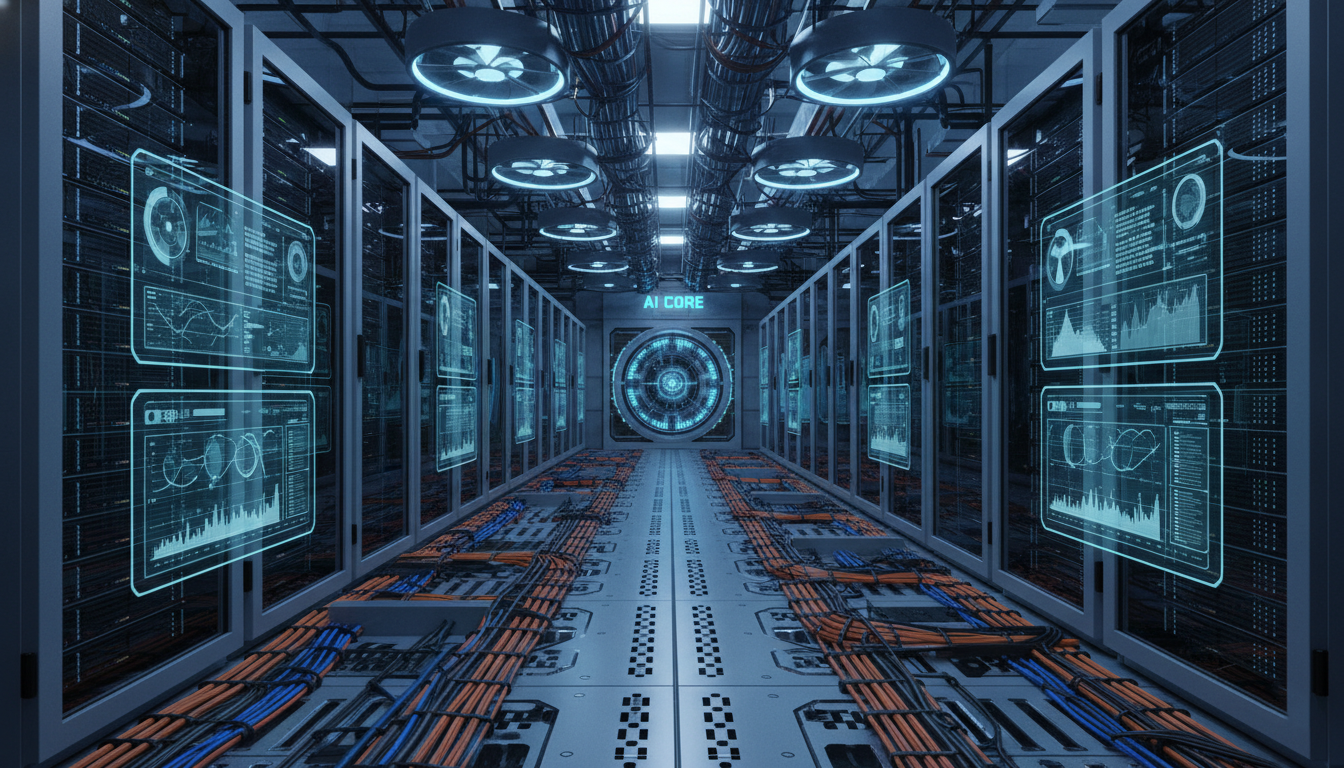
To define AI-Ready Datacenter Architecture is to describe a system designed for “Computational Density” rather than “Storage Volume.” A common misunderstanding in the executive suite is that “AI-ready” simply means adding more GPUs to existing racks. This is an oversimplification that leads to “stranded capacity”—where expensive chips sit idle because the facility cannot provide enough power to run them at peak clock speeds or enough cooling to prevent thermal throttling. A true architecture is a balanced ecosystem where the power delivery, heat rejection, and data throughput are perfectly synchronized with the duty cycle of an H100 or B200 cluster.
From a multi-perspective view, the architecture must satisfy three conflicting stakeholders: the “Power Engineer” (who demands stability and efficiency), the “Network Architect” (who demands zero-packet-loss and sub-microsecond latency), and the “Financial Officer” (who demands a high utilization rate). The risk of oversimplification lies in focusing on any one of these pillars in isolation. For instance, a facility might have the power capacity for AI but lack the “Floor Loading” strength to support the massive weight of liquid-cooled racks and backup batteries.
Authentic AI-Ready Datacenter Architecture operates on the principle of “Non-Blocking Scalability.” This means the network fabric must allow for “GPU-Direct” memory access across the entire cluster without hitting the bottlenecks of traditional CPU-bound networking. It also implies a “Modular Thermal Strategy” where the facility can support a mix of air-cooled legacy workloads and liquid-cooled AI clusters simultaneously. Achieving this requires a move away from rigid, fixed-plant designs toward “Flex-Power” infrastructures that can dynamically allocate energy based on the shifting training or inference demands of the model.
Deep Contextual Background: The Historical Shift
AI-ready datacenter architecture the history of the datacenter is a story of increasing abstraction. In the 1990s, the “Mainframe Era” focused on vertical scaling within a single box. The 2000s ushered in the “Cloud Era,” characterized by horizontal scaling across thousands of cheap, identical servers. This era was defined by “Virtualization”—the ability to slice a single server into many small, isolated environments. This worked because web traffic is “embarrassingly parallel”—one user’s request has nothing to do with another’s.
The “AI Era” has reversed this trend. We are now seeing a return to “Unified Scaling.” In the training of a multi-trillion parameter model, the GPUs must talk to each other so frequently that the network effectively becomes the “Backplane” of a giant supercomputer. This historical pivot has caught many traditional colocation providers off guard.
Conceptual Frameworks and Mental Models AI-Ready Datacenter Architecture
The “Thermal Envelope” Framework
This model treats the datacenter not as a room, but as a heat exchanger. The goal is to maximize the “Delta-T” (temperature difference) between the coolant and the heat source. In AI architecture, the “Air-to-Liquid Transition” is the primary constraint.
The “Fabric-Centric” Mental Model
In traditional computing, the server is the center of the universe. In AI computing, the network is the center. If the fabric fails or slows down, the GPUs “stall”—consuming power and generating heat while doing zero useful work.
The “Energy-to-Token” Efficiency Logic
Instead of measuring Power Usage Effectiveness (PUE) as a measure of facility overhead, this model focuses on the total energy required to generate a specific unit of inference (a “token”). This shift in logic prioritizes “Computational Efficiency” over “Cooling Efficiency.”
Key Categories and Technical Variations
Modern AI architecture can be categorized by how it handles the “Density Problem.”
Realistic Decision Logic
The choice of architecture is dictated by the “Model Scale.” If a firm is performing “Fine-tuning” on existing models, High-Density Air or DTC is often sufficient. The decision is a trade-off between “Operational Familiarity” (Air) and “Future-Proofing” (Liquid).
Detailed Real-World Scenarios AI-Ready Datacenter Architecture
Scenario 1: The “Legacy Refit” Failure
-
The Constraint: An enterprise attempts to deploy a cluster of H100s into a 2018-era datacenter designed for 7 kW racks.
-
The Outcome: To keep the chips cool, the facility must “Checkerboard” the racks—leaving every other rack empty. This doubles the fiber optic cable lengths, introducing latency that degrades the training performance by 15%.
-
The Lesson: Physical proximity is a performance metric in AI. If you can’t cool the density, you can’t achieve the performance.
Scenario 2: The “Over-Provisioned” Network
-
The Constraint: A provider builds a state-of-the-art liquid-cooled facility but uses standard leaf-spine Ethernet for the network.
-
Failure: During “All-Reduce” operations in model training, the network suffers from “Incast Congestion,” where many GPUs send data to one simultaneously.</p>
-
Second-Order Effect: The GPUs wait for the network, causing a “Power Spike” cycle that trips the facility’s circuit breakers due to the rapid oscillation in energy demand.</p>
Planning, Cost, and Resource Dynamics
The CAPEX of an AI-ready facility is significantly higher due to the specialized plumbing and power conditioning required.
Tools, Strategies, and Support Systems AI-Ready Datacenter Architecture
-
Computational Fluid Dynamics (CFD): Essential for modeling air and liquid flow to prevent “Hot Spots” in high-density environments.
-
Coolant Distribution Units (CDUs): The “Heart” of the liquid-cooled datacenter, managing pressure and temperature between the facility water and the rack-level fluid.</p>
-
DCIM (Data Center Infrastructure Management): Real-time monitoring of power and thermals at the “Socket Level” to predict failures before they occur.</p>
-
RDMA (Remote Direct Memory Access): A protocol strategy that allows GPUs to share data without involving the server’s CPU, crucial for low-latency clusters.</p>
-
Smart PDUs (Power Distribution Units): Capable of handling high-amperage loads and providing the granular data needed for “AI Duty Cycle” management.</p>
-
Busway Power Distribution: Replacing traditional overhead cabling with rigid busways to accommodate the massive current required for 100 kW racks.
-
Harmonic Mitigation Transformers: Specialized electrical equipment to clean up the “Electrical Noise” generated by thousands of high-speed power supply units.
Risk Landscape and Failure Modes
The “AI-Ready” environment introduces “Compounding Risks” that do not exist in standard facilities.
-
Thermal Runaway: In a 100 kW rack, if the cooling pump fails, the temperature can rise to destructive levels in less than 60 seconds. There is virtually no “Thermal Mass” to absorb the heat once the liquid stops moving.
-
Vibration-Induced Disk Failure: High-velocity cooling fans (needed to move air through dense racks) can create acoustic vibrations that cause traditional hard drives to fail. In an AI facility, the storage must be almost entirely NVMe/Flash.
-
The “Water Leak” Nightmare: Introducing liquid into the server room creates a risk of catastrophic shorts. This necessitates “Leak Detection Cables” and non-conductive dielectric fluids for immersion systems.
Governance, Maintenance, and Long-Term Adaptation AI-Ready Datacenter Architecture
Maintaining an AI-Ready Datacenter Architecture requires a shift from “Break-Fix” to “Predictive Maintenance.”
The “High-Density” Checklist:
-
Fluid Chemistry Audit: Monthly testing of cooling fluids for “Bio-fouling” or chemical degradation that could clog the micro-channels on the chip’s cold plate.</p>
-
Power “Step-Load” Testing: Simulating the sudden jump from 10% to 100% GPU load to ensure the facility’s UPS and generators can handle the massive transient surge.</p>
-
Optical Fiber Inspection: In 400G/800G environments, even a microscopic speck of dust on a fiber connector can cause enough signal loss to crash a training run.</p>
-
Seismic and Floor Stress Reviews: Regularly assessing the structural integrity of the floor as racks get heavier with the addition of liquid manifolds and heat exchangers.</p>
Measurement, Tracking, and Evaluation
-
Leading Indicators: “Return Temperature Index” (RTI) for air; “Coolant Approach Temperature” for liquid systems. These tell you if the cooling system is becoming less efficient before a failure occurs.
-
Lagging Indicators: “Effective FLOPs per Watt”—a measure of how much actual math was performed for every unit of energy consumed.</p>
-
Documentation Examples:
-
The “Heat Map” History: A 24/7 visual record of thermal fluctuations across the cluster.
-
The “Fabric Congestion” Log: Tracking how often the GPUs were waiting for the network, used to optimize the “Topology” of the next cluster.</p>
-
Common Misconceptions and Oversimplifications AI-Ready Datacenter Architecture
-
Myth: “PUE is the only metric that matters.” Correction: A low PUE (near 1.0) is useless if your chips are thermal-throttling and only running at 70% of their potential performance.</p>
-
Myth: “Cloud AI is always better than On-Premise.” Correction: For massive, persistent training runs, the “Data Egress” costs and the premium charged by cloud providers often make building a private AI-ready facility more economical over a 3-year horizon.</p>
-
Myth: “Ethernet is too slow for AI.” Correction: With the advent of Ultra Ethernet and RoCE v2, Ethernet is becoming competitive with InfiniBand for all but the most latency-sensitive training tasks.</p>
-
Myth: “Liquid cooling is too expensive/dangerous.” Correction: At densities above 30 kW per rack, liquid cooling is actually cheaper than the electricity cost of running the massive fans required for air cooling.</p>
Ethical and Practical Considerations
Building AI infrastructure consumes massive amounts of energy and water. The “Ethical Architect” must consider the “Water Scarcity” of the local region. A facility that uses “Evaporative Cooling” to stay efficient might consume millions of gallons of water a day, potentially straining local resources. The move toward “Closed-Loop” liquid cooling and “Heat Reuse” (using the datacenter’s waste heat to warm nearby buildings) is no longer a PR move—it is a requirement for community acceptance and long-term regulatory compliance.</p>
Conclusion AI-Ready Datacenter Architecture
The architecture of the datacenter has reached its most significant inflection point since the invention of the microprocessor. Building for AI is not an act of “Adding Capacity” but an act of “Engineering Physics.” The successful AI-Ready Datacenter Architecture is one that respects the laws of thermodynamics, signal integrity, and fluid dynamics as much as it respects the code of the models it hosts. As we push toward “General Intelligence,” the facility itself becomes a vital part of the algorithm—the silent, silicon foundation upon which the future of computing is being written.</p>
Leave a Reply