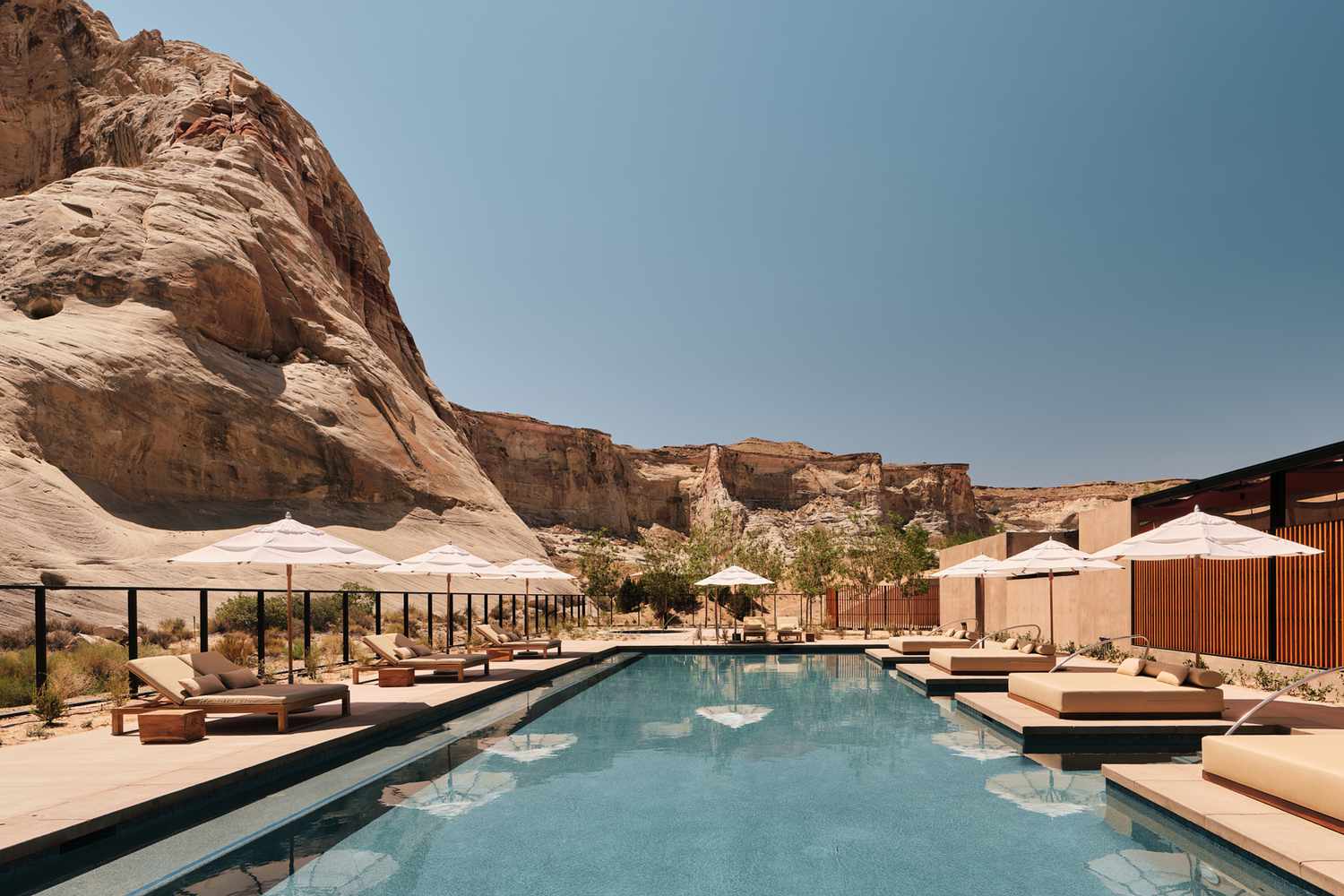
Best mountain retreats united states the North American continent is defined by its verticality. From the weathered, ancient ridges of the Appalachians to the jagged, tectonic youth of the Cascades and the Rockies, the mountain ranges of the United States are not merely topographical features; they are psychological boundaries. For the modern traveler, the ascent into these high-altitude environments represents a deliberate decoupling from the frenetic pace of coastal urbanity. However, the pursuit of the “ideal” mountain experience has evolved from a rugged survivalist endeavor into a sophisticated intersection of luxury, ecological stewardship, and wellness.
To understand the current landscape of interior travel, one must look beyond the postcard imagery of log cabins and snow-capped peaks. The mountain retreat has become a specialized architectural and experiential category, designed to mediate between the harshness of the alpine climate and the human desire for comfort. This mediation is a complex engineering and hospitality feat, involving everything from high-altitude physiological adaptation to the management of seasonal resource volatility. The “best” retreats are those that successfully integrate into their specific micro-climates rather than imposing themselves upon them.
As the travel industry shifts toward “intentionality,” the criteria for excellence in mountain hospitality have become increasingly rigorous. It is no longer sufficient to provide proximity to a ski lift; a premier retreat must now offer a comprehensive immersion into the geological and cultural history of its region. Whether through the preservation of historic mining-era aesthetics in Colorado or the celebration of biodiversity in the Blue Ridge Mountains, the contemporary mountain escape serves as a conduit for a deeper understanding of the American wilderness. This editorial provides a definitive framework for evaluating these spaces, moving beyond surface-level aesthetics to the core of what constitutes an authoritative alpine experience.
Understanding “best mountain retreats united states”
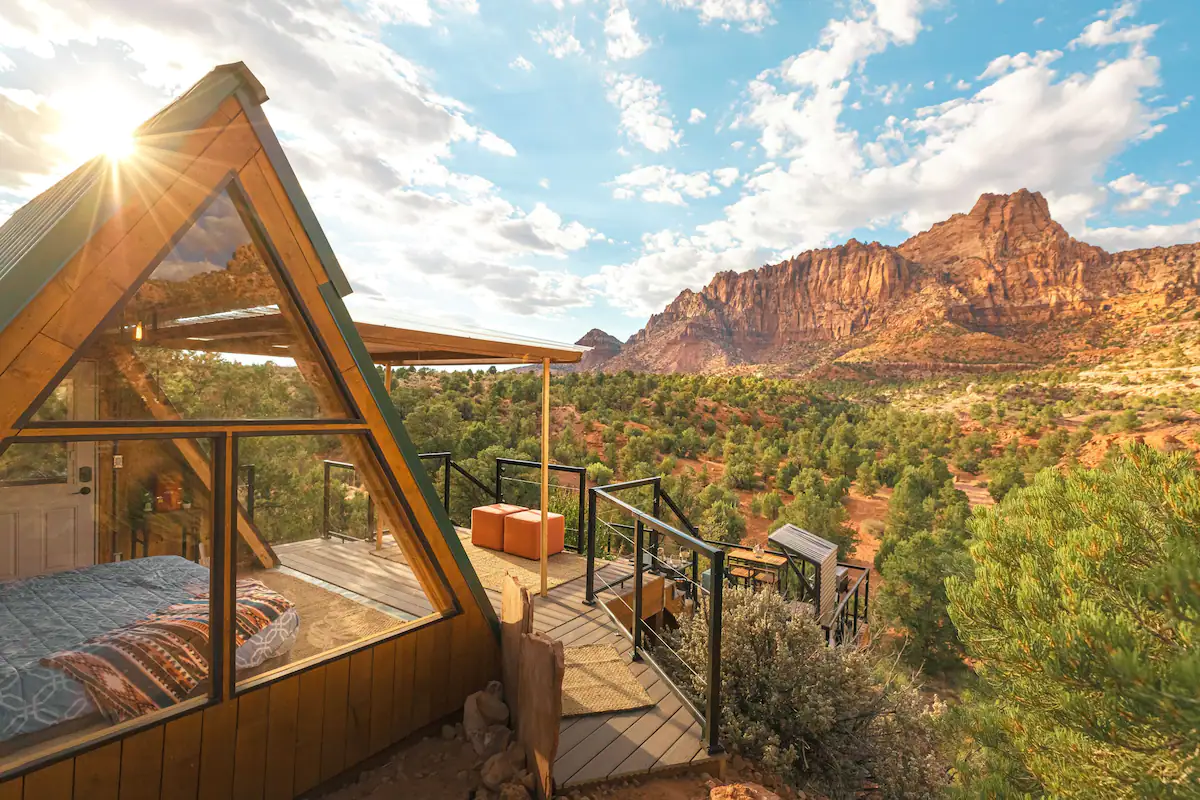
The nomenclature associated with the best mountain retreats united states is frequently subject to semantic inflation. In popular media, “retreat” is often used interchangeably with “resort,” but for the discerning analytical traveler, these are distinct categories. A resort implies a concentration of activity, density, and amenities—often centered around a single commercial driver like skiing. A retreat, conversely, implies a withdrawal—a focus on seclusion, architectural silence, and the prioritization of the natural landscape over artificial entertainment.
From a multi-perspective viewpoint, the evaluation of a retreat must account for the “Threshold of Isolation.” A retreat that is too accessible risks losing its psychological value as a sanctuary, while one that is too remote introduces logistical frictions that can undermine the experience. The oversimplification risk here is the assumption that high-altitude luxury is universally applicable. In reality, a retreat in the high deserts of New Mexico serves a fundamentally different purpose—focusing on clarity of light and spiritual stillness—than a retreat in the temperate rainforests of the Pacific Northwest, which emphasizes moisture, verdancy, and enclosure.
True mastery in this domain also requires an understanding of “Place-Based Design.” The finest examples of mountain architecture in the U.S. do not use a generic “Swiss Chalet” aesthetic; they utilize materials native to their specific ridge—be it the heavy timber and granite of the Sierra Nevada or the weathered cedar of the Adirondacks. This architectural honesty is a primary indicator of a retreat’s authority. When we search for the top-tier experiences, we are looking for spaces that act as a “Lens,” focusing the viewer’s attention on the specific nuances of the local ecosystem rather than distracting from it.
Contextual Background: The Evolution of Alpine Hospitality
Best mountain retreats united states the history of mountain stays in the U.S. follows a trajectory from resource extraction to leisure. In the late 19th century, the first “retreats” were often the repurposed homes of mining magnates or the rustic camps of scientific expeditions. The establishment of the National Park Service in 1916 introduced the “National Park Service Rustic” style—colloquially known as “Parkitecture”—which used local stone and massive logs to ensure buildings harmonized with the environment.
The mid-20th century saw the “Alpine Boom,” driven by the return of soldiers from the 10th Mountain Division who brought European skiing culture to the American West. This era introduced the large-scale resort model. However, the 21st-century evolution has seen a return to the “Retreat” roots: smaller, highly curated properties that prioritize ecological footprints and “Deep Quiet.” This transition marks a shift in the American psyche—from conquering the mountain to coexisting with it.
Conceptual Frameworks and Mental Models Best Mountain Retreats United States
The “Altitude-Comfort” Paradox
This model suggests that as altitude increases, the physical cost of providing comfort grows exponentially. Heating, oxygen management, and supply chain logistics become increasingly difficult. A retreat’s success is measured by how “invisible” these engineering solutions are to the guest.
The “Biophilic Integration” Matrix
This framework evaluates a retreat based on how well it blurs the line between interior and exterior. It examines the use of light, the orientation of views toward “anchor peaks,” and the use of sensory elements like the sound of moving water or the scent of local flora to ground the traveler in the space.
The “Seasonal Resilience” Model
Mountains are volatile. A retreat that is excellent in winter may be inhospitable during the “mud season” of spring. The mental model here is to evaluate a retreat as a “Four-Season Machine”—assessing its adaptability to the radical shifts in light, temperature, and accessibility that define high-altitude life.
Key Categories and Regional Trade-offs
The diversity of the American interior requires a categorical approach to selection.
Realistic Decision Logic
When choosing among the best mountain retreats united states, the decision should follow a “Physiological-First” logic. If the traveler is sensitive to altitude, the high-altitude sanctuaries of Telluride or Aspen (often 8,000+ feet) should be secondary to the moderate elevations of the Blue Ridge or the White Mountains. Conversely, if the goal is “Peak Exposure” and glacial views, the logistical challenges of the Northern Rockies must be accepted as the “Price of Entry.”
Detailed Real-World Scenarios Best Mountain Retreats United States
The “Snow-Bound” Isolation
-
The Constraint: A retreat located at the end of a 10-mile private road in the Sawtooth Mountains of Idaho.
-
The Failure Mode: A late-season blizzard closes the access road for three days beyond the intended stay.
-
Resolution: High-tier retreats maintain “Redundant Provisions”—three days of extra fuel, food, and satellite communication—turning a logistical failure into an extended period of sanctuary.
The “Altitude Adjustment” Friction
-
The Constraint: A luxury retreat in the San Juan Mountains sitting at 9,500 feet.
-
The Result: Guests from sea-level environments experience “Acute Mountain Sickness” (AMS), undermining the first 48 hours of the retreat.
-
Mitigation: The best retreats now offer “In-Room Oxygenation” and specialized hydration protocols, acknowledging that physiological comfort is the foundation of luxury.
Planning, Cost, and Resource Dynamics
The economics of a mountain retreat are driven by “Scarcity” and “Maintenance.”
Tools, Strategies, and Support Systems
-
Topographic Pre-Visualization: Using high-resolution satellite mapping to understand the “Sun-Path” of a retreat before booking (essential for winter warmth).
-
Layered Clothing Systems: Moving beyond “fashion” to technical merino and hardshell systems to ensure the exterior can be enjoyed regardless of the “Atmospheric Lapse Rate.”
-
High-Altitude Hydration Protocols: Recognizing that the “Vapor Pressure Deficit” in dry mountain air requires 2x the water intake of coastal environments.
-
Satellite Communication (SATCOM): Maintaining a non-cellular link for safety in “Deep Wilderness” retreats.
-
Micro-Climate Monitoring: Utilizing local weather stations (like SNOTEL) to track real-time snowpack and trail conditions.
Risk Landscape and Environmental Failure Modes Best Mountain Retreats United States
The primary risk in mountain environments is “Environmental Compounding.” A minor trail injury becomes a major crisis if a sudden mountain fog (orous) descends, dropping visibility to zero and temperature by 20 degrees.
-
Geological Risks: Rockfalls and avalanches (winter/spring).
-
Meteorological Risks: Lightning strikes on exposed ridges; flash floods in canyons.
-
Biological Risks: Encounters with apex predators (Grizzlies/Cougars) in the Northern Rockies.
-
Physiological Risks: Hypothermia, AMS, and intense UV exposure (thinner atmosphere).
Governance, Maintenance, and Long-Term Adaptation
The preservation of these retreats requires a “Stewardship Governance.”
The Maintenance Checklist:
-
Fuel Security: Ensuring secondary heating sources are checked before the “First Frost.”
-
Trail Integrity: Annual clearance of deadfall and erosion control to prevent ecosystem damage.
-
Wildlife Mitigation: Maintaining “Bear-Proof” infrastructure to prevent habituation.
-
Forest Health: Proactive “Fuel Reduction” (thinning) to mitigate wildfire risk in the Western U.S.
Measurement and Evaluation of the Retreat Experience Best Mountain Retreats United States
Evaluating a stay goes beyond a “star rating.” It involves measuring the “Restorative Dividend.”
-
Quantitative Signals: Sleep quality (via biometric tracking); heart rate variability (HRV) recovery.
-
Qualitative Signals: The “Internal Silence” metric—how long it takes for the mental chatter of urban life to cease.
-
Documentation: Keeping a “Field Journal”—not just for memories, but to track the specific changes in light and weather that define the mountain’s personality.
Common Misconceptions and Oversimplifications
-
Myth: “Summer is the only time to hike.” Correction: “Golden Hour” in the autumn offers better visibility, fewer insects, and more stable atmospheric conditions.
-
Myth: “High altitude is always cold.” Correction: The “Solar Radiation” at 10,000 feet can feel like 80°C on the skin even if the air is 40°C.
-
Myth: “Log cabins are the most authentic.” Correction: Many historic mountain structures were actually stone or shingle; “Log” is often a 20th-century aesthetic choice.
-
Myth: “Remote means disconnected.” Correction: The best retreats have high-speed Starlink integration, allowing for “Work-from-Mountain” flexibility.
Ethical and Practical Considerations Best Mountain Retreats United States
There is a growing “Gentrification of the Wilderness.” As the demand for the best mountain retreats united states increases, the pressure on local communities and ecosystems grows. Ethical travel in this domain requires choosing retreats that practice “Localism”—hiring from within the valley, sourcing food from mountain ranchers, and contributing to local conservation land trusts. The goal is to be a “Temporary Resident” rather than a “Consumer of Views.”
Conclusion
The ascent to a mountain retreat is a journey toward the essential. In the vertical landscapes of the United States, we find a rare opportunity to measure ourselves against the scale of geological time. Whether nestled in the ancient, misty hollows of the Blue Ridge or perched on the wind-swept ridges of the Grand Tetons, these retreats offer more than luxury; they offer perspective. By approaching the mountain with intellectual honesty—acknowledging the risks, respecting the physiology, and prioritizing the ecosystem—the traveler ensures that the sanctuary remains resilient for the generations to follow.
Leave a Reply