Zero-carbon structural envelopes the built environment is currently responsible for a staggering portion of global greenhouse gas emissions, yet the discourse often fixates on operational energy—the heating, cooling, and lighting of spaces—while neglecting the physical shell that makes these activities possible. As urban density increases and climate mandates tighten, the focus is shifting toward the fundamental engineering of the building skin. This transition requires a departure from traditional “cladding” mentalities toward a sophisticated, integrated approach to material science and thermal dynamics.
Achieving a state where the building exterior contributes nothing to the net carbon atmospheric load involves a radical reconciliation of embodied carbon and operational efficiency. This systemic shift is redefining the relationship between the architect, the structural engineer, and the environmental scientist, turning the building envelope into a high-performance biological or mechanical membrane.
The complexity of zero-carbon structural envelopes lies in their dual mandate: they must act as a perfect thermal barrier while simultaneously sequestering carbon or utilizing materials with a negligible carbon footprint. This necessitates a move away from carbon-intensive materials like traditional Portland cement and virgin steel toward bio-based composites, advanced mass timber, and carbon-negative minerals. The following analysis explores the technical, economic, and philosophical frameworks required to master this transition in contemporary construction.
Understanding “Zero-Carbon Structural Envelopes”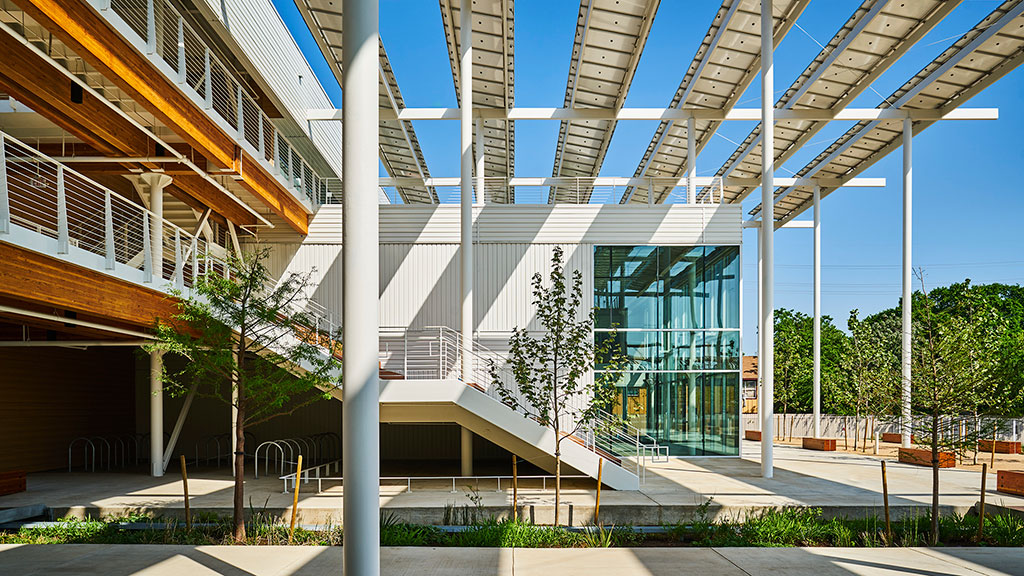
The term zero-carbon structural envelopes refers to the integrated assembly of a building’s exterior—including walls, roofs, and foundations—that achieves a net-zero carbon impact across its entire lifecycle. This definition encompasses two distinct carbon phases: embodied carbon (the emissions resulting from manufacturing, transport, and construction) and operational carbon (the energy the envelope saves or generates over decades). To reach “zero,” the sequestration potential of the materials must equal or exceed the emissions generated during their creation.
A common misunderstanding is that a zero-carbon envelope is simply a “passive” house with better insulation. In reality, the distinction is structural. A passive house might use massive amounts of petroleum-based spray foam to achieve thermal efficiency, but the high embodied carbon of that foam may take fifty years of energy savings to “pay back” its initial carbon debt. A zero-carbon envelope, conversely, prioritizes the carbon-debt profile of the material itself from day one, often utilizing hempcrete, straw-bale, or cross-laminated timber (CLT) to ensure the building starts its life in a carbon-negative state.
Oversimplification risks in this field often lead to “carbon tunnel vision,” where designers ignore the durability or recyclability of a material in favor of a low initial carbon score. A bio-based material that rots in fifteen years is not a zero-carbon solution; it is a temporary carbon storage unit that will eventually release its load back into the atmosphere.
Historical Context and the Carbon Pivot
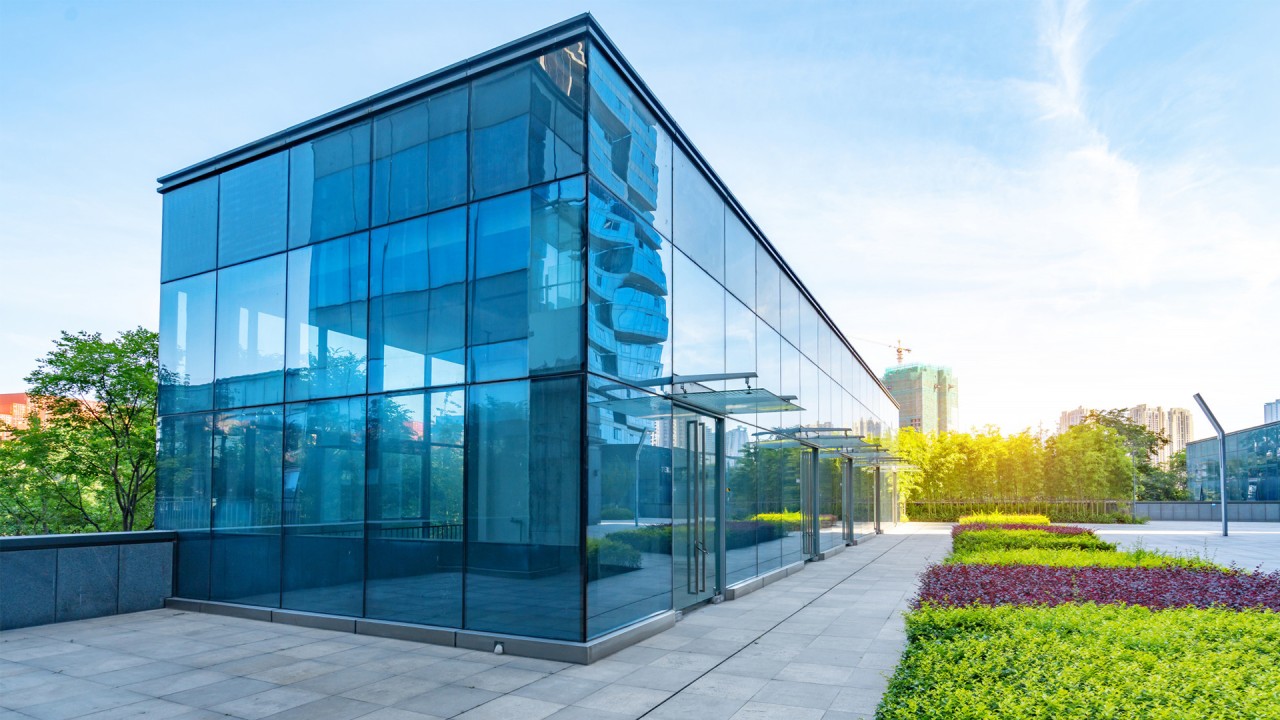
Zero-carbon structural envelopes for much of the 20th century, the building envelope was treated as a secondary aesthetic layer draped over a carbon-heavy concrete or steel skeleton. The “International Style” popularized glass curtain walls that were notoriously inefficient, relying on massive HVAC systems to counteract the “greenhouse effect” of the building’s own skin.
However, it wasn’t until the early 21st century that the “carbon cost” of the materials themselves became a primary engineering constraint. We are now moving into an era of “Bio-Digitalism,” where computational design allows us to optimize material thickness and placement, ensuring that every gram of material in the envelope serves a structural or thermal purpose, thereby minimizing waste and carbon load.
Conceptual Frameworks and Mental Models Zero-Carbon Structural Envelopes
To navigate the design of these systems, professionals employ several specific mental models:
-
The Carbon Payback Period: This framework treats carbon as a currency. If an envelope addition (like triple-glazing) costs 500kg of CO2 to manufacture, how many years of energy savings are required to offset that cost? If the payback exceeds the lifespan of the component, the addition is a net failure.
-
The Regenerative Membrane: Viewing the envelope not as a wall, but as an organism. Does it breathe? Does it absorb moisture? This shifts the goal from “total airtightness” to “hygroscopic management,” where natural materials manage humidity and temperature without mechanical intervention.
Material Typologies and Performance Trade-offs
Selecting the right assembly for zero-carbon structural envelopes involves navigating a complex matrix of weight, thermal mass, and sequestration potential.
The decision logic here is context-dependent. In a high-rise urban environment, mass timber is often the only viable zero-carbon structural option due to weight constraints. In a rural, single-story context, rammed earth or straw-bale might offer superior thermal performance with almost zero transport emissions.
Operational Scenarios: Decision Points and Failures Zero-Carbon Structural Envelopes
Scenario 1: The High-Rise Timber Office
-
Constraint: Strict fire codes and height limits.
-
Decision Point: Whether to leave the timber exposed for aesthetic and sequestration reasons or to cover it in gypsum for fire rating.
-
Failure Mode: Covering timber with high-embodied-carbon finishes can nullify the carbon benefits of the wood.
-
Solution: Using char-layer calculations to achieve fire ratings without additional materials.
Scenario 2: The Retrofitted Industrial Warehouse
-
Constraint: Historic masonry walls that cannot be altered externally.
-
Decision Point: Internal insulation vs. maintaining the thermal mass of the brick.
-
Failure Mode: Internal insulation can cause the brick to freeze and crack because it no longer receives heat from the interior.
-
Second-Order Effect: This necessitates a “breathing” insulation like wood-fiber board that manages moisture at the interface.
Economic Dynamics and Resource Allocation
The financial profile of a zero-carbon envelope is often front-loaded. While the “raw” material cost of a timber frame may be 10–15% higher than concrete, the speed of assembly and the reduction in foundation requirements (due to lower weight) can often equalize the total project budget.
The opportunity cost of not moving toward these systems includes future carbon taxes, higher insurance premiums for climate-vulnerable buildings, and the “stranded asset” risk where buildings become un-leasable due to poor environmental performance.
Methodological Tools and Support Systems
The design of zero-carbon structural envelopes is now a data-driven discipline.
-
Life Cycle Assessment (LCA) Software: Tools like Tally or One Click LCA allow architects to see the carbon impact of a wall assembly in real-time as they design.
-
Hygrothermal Modeling (WUFI): Essential for bio-based envelopes to simulate how moisture will move through straw or wood over decades.
-
Parametric Thermal Optimization: Using algorithms to vary window sizes based on solar orientation, minimizing the need for cooling.
-
Digital Material Passports: QR codes or RFID tags embedded in the envelope that list the carbon content and recycling instructions for future generations.
Taxonomy of Risk and Compound Failure Modes Zero-Carbon Structural Envelopes
The primary risk in zero-carbon design is “Performance Gap”—the difference between a computer model and reality.
-
Thermal Bridging: A single steel bolt passing through a timber wall can act as a “highway” for heat, causing condensation and rot in an otherwise perfect zero-carbon wall.
-
Sequence Sensitivity: Bio-based materials are vulnerable to weather during construction. If a CLT floor gets soaked before the roof is on, the “locked-in” moisture can lead to mold issues that are impossible to fix once the envelope is sealed.
-
Material Obsolescence: Using a highly specialized, proprietary low-carbon resin that cannot be repaired in twenty years because the company has gone out of business.
Governance, Maintenance, and Stewardship
Unlike a concrete wall, a zero-carbon bio-envelope requires “active stewardship.” It is not a set-and-forget system.
-
Monitoring: Sensors embedded in the insulation to track moisture levels.
-
Review Cycles: Annual inspections of “sacrificial layers” like lime renders or timber cladding.
-
Adjustment Triggers: If the moisture in a hempcrete wall exceeds 20% for more than a week, the building’s mechanical ventilation must automatically increase to “dry” the envelope.
Layered Checklist for Long-Term Adaptation:
-
Verify integrity of external weather barriers.
-
Calibrate automated shading to current solar patterns (accounting for climate shift).
-
Audit the “Material Passport” for any components reaching their end-of-life.
Measurement and Quantitative Evaluation Zero-Carbon Structural Envelopes
We measure success through a hierarchy of indicators:
Leading Indicators:
-
Embodied carbon per square meter ().
-
Total weight of sequestered carbon in the structure.
-
Airtightness (ACH at 50 Pascals).
Lagging Indicators:
-
Actual vs. Predicted energy use intensity (EUI).
-
Post-occupancy humidity stability.
-
The “Carbon Payback” milestone (the date the building becomes net-negative).
Common Misconceptions and Oversimplifications
-
“Wood is always zero-carbon”: If timber is sourced from old-growth forests or transported across oceans, its carbon footprint can be worse than local concrete.
-
“Zero-carbon means no glass”: High-performance triple glazing can be part of a zero-carbon strategy if its heat gain in winter offsets its embodied carbon.
-
“These buildings are a fire risk”: Mass timber and hempcrete often have superior fire resistance compared to steel, which loses structural integrity quickly under heat.
-
“Zero-carbon is only for new builds”: Retrofitting existing envelopes with wood-fiber or mycelium insulation is one of the most effective carbon reduction strategies available.
-
“Net-zero is the same as Zero-Carbon”: Net-zero often relies on “offsets” (planting trees elsewhere). Zero-carbon focuses on the actual physics of the building.
Ethical and Practical Considerations Zero-Carbon Structural Envelopes
There is a significant “Geographic Ethics” component to zero-carbon envelopes. Sourcing “low-carbon” materials from developing nations where labor protections are weak or where extraction destroys local ecosystems is a form of environmental colonialism. A true zero-carbon strategy must be “Locally Rooted,” using materials that make sense for the local biome and economy.
Furthermore, we must consider “Social Durability.” A building that is technically zero-carbon but aesthetically or functionally hated by its community will be demolished prematurely. The most carbon-efficient building is one that stays standing for three hundred years because people find it beautiful and useful.
Synthesis: The Future of the Building Skin
The transition to zero-carbon structural envelopes is not merely a technical upgrade; it is a fundamental re-evaluation of what a building is. We are moving away from the era of the “Machine for Living In” toward the era of the “Ecosystem for Living In.” The building envelope of the future will not be a static wall, but a sophisticated, carbon-sequestering filter that mediates between a changing climate and human comfort. Success in this field requires intellectual honesty, a willingness to embrace the idiosyncrasies of natural materials, and a commitment to long-term stewardship over short-term aesthetic trends.
Leave a Reply