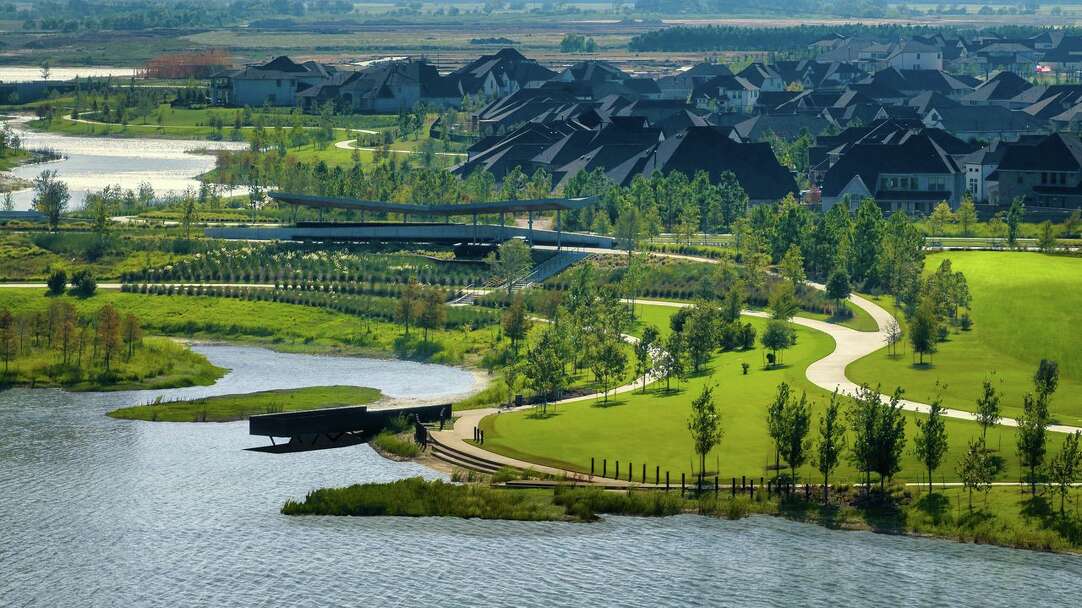
Top master planned communities usa the American landscape is increasingly defined not by organic urban sprawl, but by the intentionality of the master planned community (MPC). These large-scale residential developments represent a fundamental shift in how land is utilized, moving away from the “tract housing” models of the mid-20th century toward a more holistic, system-based approach to living. At their core, these communities are comprehensive ecosystems where residential, commercial, and recreational spaces are integrated under a singular, long-term vision.
Understanding this shift requires looking beyond the amenities of a golf course or a community center. It involves analyzing the intersection of civil engineering, environmental stewardship, and the socio-economic drivers that make a location viable for decades. The complexity of these developments lies in their duration; a master plan conceived today may not reach full “build-out” for twenty or thirty years, necessitating a design that is both rigid enough to maintain its identity and flexible enough to adapt to future technological and demographic shifts.
In the current market, the dialogue surrounding these developments often focuses on sales volume or aesthetic trends. However, a deeper editorial investigation reveals that the most resilient examples are those that successfully navigate the tension between private governance and public integration.
Understanding “top master planned communities usa”

To identify the top master planned communities usa, one must first decouple “popularity” from “performance.” Often, the communities that top sales charts are simply those in high-growth corridors with aggressive marketing. A more rigorous definition looks at the “absorption rate” in relation to the stability of the Homeowners Association (HOA) reserves and the long-term viability of the internal infrastructure.
A common misunderstanding is that a master planned community is merely a large subdivision. The distinction lies in the diversity of land use. A true MPC manages the “jobs-to-housing” ratio, ensuring that residents aren’t just sleeping in a silo but are part of a functional economic unit.
Historical Evolution: From Garden Cities to Smart Hubs
Top master planned communities usa the DNA of the American MPC can be traced back to the Garden City movement of the early 20th century, which sought to marry the economic benefits of the city with the health benefits of the countryside. Post-WWII, this evolved into Levittown-style mass production, which prioritized speed over soul. The 1960s and 70s saw a pivot toward “New Towns” like Reston, Virginia, and Columbia, Maryland, which introduced social engineering—aiming for racial and economic integration through intentional zoning.
By the 1990s and early 2000s, the “New Urbanism” movement took hold, emphasizing front porches, narrow streets, and the “five-minute walk.” Today, we are in the era of the “Resilient Smart Community.” These developments integrate high-speed fiber optics, decentralized energy grids, and native-scaping as standard features. The trajectory has moved from providing a shelter to providing a lifestyle, and finally, to providing a secure, managed future in an increasingly volatile world.
Conceptual Frameworks and Mental Models Top Master Planned Communities Usa
To analyze these complex systems, we can apply several mental models:
-
The 20-Minute Neighborhood: This framework posits that all essential human needs—groceries, healthcare, education, and recreation—should be accessible within a 20-minute walk or bike ride. The most successful MPCs use this as their primary layout constraint.
-
The Ecosystem Services Model: Instead of viewing nature as “landscaping” (an expense), this model views it as “infrastructure” (an asset).
-
The Governance-as-Product Model: Residents are not just homeowners; they are shareholders in a private corporation (the HOA). This model evaluates the community based on the transparency, solvency, and adaptability of its governing documents.
Key Categories and Variations
Not all MPCs are built for the same demographic or environmental reality. The trade-offs are significant.
Realistic Decision Logic
When evaluating these categories, the decision often hinges on the “Lifecycle Match.” A family may prioritize a community in Texas for its school district, but as those children graduate, the community’s lack of “downsizing” options (townhomes or luxury condos) may force a sale. The “top” communities are those that provide housing products for every stage of life, allowing a resident to move within the same three-mile radius over fifty years.
Detailed Real-World Scenarios Top Master Planned Communities Usa
Scenario 1: The Water-Scarse Desert Development
In a new MPC in Arizona, the developers face a 100-year water supply mandate.
-
Constraint: Zero net-new water usage from the aquifer.
-
Decision Point: Implement a private gray-water recycling plant vs. purchasing water rights at a premium.
-
Failure Mode: If the recycling plant fails or becomes too expensive to maintain, HOA dues spike, causing a mass exodus of fixed-income residents.
Scenario 2: The Coastal Resiliency Challenge
A community in South Carolina is built on low-lying land near a marsh.
-
Decision Point: Use traditional sea walls vs. “living shorelines” and elevated foundations.
-
Second-Order Effect: Choosing living shorelines lowers insurance premiums for the entire community but requires stricter “no-chemical” lawn mandates for every homeowner to protect the marsh ecosystem.
Planning, Cost, and Resource Dynamics
The financial structure of an MPC is a delicate balance of “front-loaded” costs and “long-tail” revenue.
Cost and Value Range Table
Risk Landscape and Failure Modes
The primary risk in an MPC is “Developer Abandonment.”
-
The “Ghost Town” Phase: Early residents live in a construction zone for a decade. If the market dips, the construction stops, leaving them isolated.
-
Infrastructure Decay: If the HOA doesn’t set aside “Reserve Funds” for road repaving thirty years down the line, a sudden $20,000 special assessment per household can bankrupt the community.
-
Monoculture Failure: Designing for only one type of buyer (e.g., young tech workers) makes the community vulnerable to specific economic sector crashes.
Governance, Maintenance, and Long-Term Adaptation Top Master Planned Communities Usa
The Adaptation Checklist
-
Zoning Review: Does the community allow for “Accessory Dwelling Units” (ADUs) as the population ages?
-
Technology Refresh: Is there a plan to upgrade fiber-optic lines or EV charging stations every 10 years?
Measurement, Tracking, and Evaluation
How do we prove a community is succeeding? We look at leading and lagging indicators.
-
Leading Indicator: The number of residents who refer friends or family to move into the community (High Social Capital).
-
Lagging Indicator: The resale value of homes compared to the surrounding county average over a 15-year period.
-
Documentation Example: A “Community Health Dashboard” that tracks water usage, crime rates (usually near zero in MPCs), and “amenity utilization” (if the pool is empty, it’s a wasted resource).
Common Misconceptions and Oversimplifications Top Master Planned Communities Usa
-
“Gated means safer”: Statistics often show that gates provide a false sense of security while hindering emergency response times.
-
“HOAs are always restrictive”: While some are, the best HOAs act as protective shields against property devaluation.
-
“Master planning is socialist”: In the US, it is a peak expression of private property rights and market-based solutions to urban chaos.
-
“It’s just about the golf course”: Modern buyers actually prefer “walking trails” and “community gardens” over golf.
-
“Natural areas are maintenance-free”: “Wild” land requires expensive management to prevent fire hazards and invasive overgrowth.
Ethical and Contextual Considerations
The rise of the MPC brings up questions of “Exclusionary Zoning.” By creating high-barrier-to-entry communities, are we deepening the divide between the “haves” and “have-nots”? The most ethically sound developers are now including “workforce housing” (homes for teachers, firefighters, and police) within the master plan to ensure a functional, diverse social fabric.
Conclusion Top Master Planned Communities Usa
The top master planned communities usa are those that function as more than just a collection of rooftops. They are complex, adaptive systems that require a high degree of technical mastery to execute and even higher levels of civic engagement to maintain. As we look toward a future defined by environmental uncertainty and a desire for more localized, walkable lifestyles, the master planned community stands as a blueprint for how we might re-engineer the American Dream for a new century.
Leave a Reply