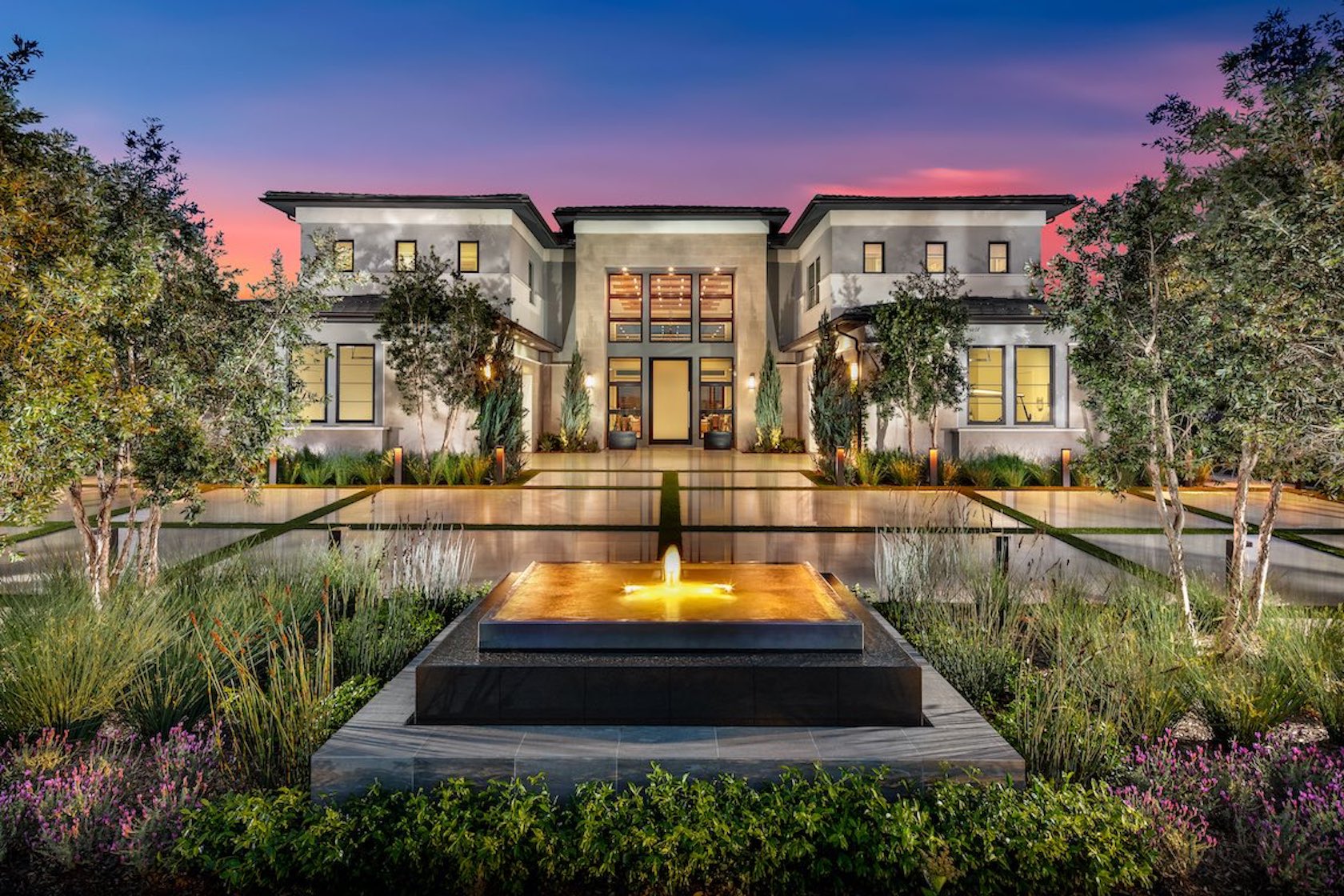
Luxury coastal homes usa the American shoreline represents more than a geographical boundary; it is a complex intersection of high-value capital, specialized engineering, and increasingly volatile ecological dynamics. To discuss the upper echelon of residential waterfront property is to analyze a sector where the traditional metrics of real estate—square footage and aesthetic finishes—are secondary to the sophisticated management of environmental exposure.
Current trends in high-end coastal development reflect a fundamental pivot from “vulnerability” to “calculated resilience.” The modern owner of a premium seaside estate is no longer satisfied with mere aesthetic beauty. There is an intellectual shift toward understanding the “Hydro-Morphology” of a site: how the sea moves, how the sand migrates, and how the salt-laden atmosphere interacts with the chemistry of construction materials. This shift has birthed a new class of “Active Architecture,” buildings that do not just sit on the land but interact with it through sophisticated drainage systems, hurricane-rated glazing, and adaptive foundations.
In the 2026 market, the discourse surrounding coastal living has matured. It has moved past the era of “conquering the coast” toward a more nuanced philosophy of “Integration.” This involves a collision of disciplines—structural engineering, marine biology, and climate modeling—all distilled into a single residential footprint. This article provides a rigorous, editorial interrogation of the factors that define the most significant shoreline residences in the country, moving beyond surface-level luxury to examine the systemic realities of these complex assets.
Understanding “luxury coastal homes usa”
To accurately define luxury coastal homes usa, one must look past the gloss of architectural photography. In a professional capacity, this term describes a specific category of “High-Performance Real Estate” that occupies the delicate transition zone between marine and terrestrial ecosystems. A common misunderstanding among buyers is the belief that “luxury” equates to “invincibility.” In reality, the most expensive homes are often the most exposed, requiring a level of mechanical and structural stewardship that far exceeds inland properties.
Oversimplification risks are rampant in this sector. Marketing materials often focus on “unobstructed views,” yet from an editorial and engineering perspective, an unobstructed view is often a “high-velocity wind path.” The true “luxury” in luxury coastal homes usa today is the luxury of security—the peace of mind that comes from knowing a home can withstand a 500-year storm event without losing its structural or digital integrity.
Furthermore, we must distinguish between “Access” and “Ownership.” Owning a coastal asset in the U.S. means entering into a lifelong negotiation with state coastal commissions, local zoning boards, and insurance underwriters. It is a multi-dimensional commitment where the “Product” is not just the house, but the ongoing ability to maintain the viability of the land it sits upon. Identifying the top tier of these homes requires an analytical lens that values “The Invisible Build”—the pilings, the vapor barriers, and the corrosion-resistant alloys that keep the property functional.
Contextual Evolution: From Vernacular Cottages to Fortified Estates
Luxury coastal homes usa the trajectory of the American waterfront home has transitioned through three distinct phases. Historically, coastal builds were “Sacrificial.” They were light, wood-framed structures designed to let the wind pass through, utilizing deep porches for natural ventilation before the advent of climate control.
The mid-century “Boom” introduced a more aggressive stance. With the rise of the Interstate Highway System and advancements in concrete technology, developers began to build “Immovable Objects.” This era saw the rise of massive seawalls and the filling of wetlands to create more “buildable” lots. The goal was to dominate the landscape, treating the ocean as a static backdrop rather than a dynamic force.
We have now entered the era of “The Adaptive Fortress.” Today’s premier coastal builds recognize that the ocean is rising and storms are intensifying. This historical pivot has led to the adoption of “Commercial-Grade” residential construction.
Conceptual Frameworks and Mental Models Luxury Coastal Homes Usa
The “Passive-First” Resilience Model
This framework prioritizes mechanical-free survivability.
The “Envelope Integrity” Framework
In coastal engineering, the “Envelope” (the roof, windows, and doors) is the primary line of defense. This model posits that a single breach in the envelope during a storm causes an internal pressure spike that can literally lift a roof off from the inside.
The “Ecosystem Services” Mental Model
This model views the property not as a separate entity, but as part of a coastal “Buffer.” It argues that a home’s long-term value is tied to the health of the surrounding dunes or mangroves. Armoring a property with a seawall may protect it in the short term, but it often destroys the beach in front of it, eventually undermining the property’s market appeal.
Typologies of Coastal Living Luxury Coastal Homes Usa
The geographical diversity of the U.S. coastline necessitates vastly different construction philosophies. What works in the rocky cliffs of Big Sur is a recipe for failure on the shifting sands of the Hamptons.
Realistic Decision Logic
Choosing a site for luxury coastal homes usa involves a “Risk-Aversion Matrix.” A buyer must decide between “Proximity” and “Protection.” A home built on the primary dune offers the most visceral connection to the sea but carries the highest insurance premiums and the shortest projected lifespan. Conversely, building on the “Second Tier” (behind a protective ridge) offers a logarithmic increase in security at the cost of the direct “toes-in-sand” experience.
Detailed Real-World Scenarios Luxury Coastal Homes Usa
The “Sacrificial” First Floor
-
The Constraint: A zoning requirement in a high-surge zone (V-Zone) that prohibits finished living space below a certain elevation.
-
The Strategy: Designing a “Grand Entry” that uses flood-vented garage space and high-end materials like marine-grade stone that can be hosed down after a surge.
-
Failure Mode: Installing sensitive electrical panels or elevator pits in these lower levels, leading to a total building shutdown after a minor flood.
The “Salt-Mist” Enclosure
-
The Constraint: A property within 500 feet of the mean high-tide line faces constant “Chloride Attack” on all metal surfaces.
-
The Decision Point: Utilizing standard aluminum window frames versus 316-grade stainless steel or copper-clad units.
-
Second-Order Effect: Choosing the lower-cost aluminum results in “Pitting” and operational failure of window hardware within five years, requiring a disruptive and expensive full-house window replacement.
Planning, Cost, and Resource Dynamics
The “Coastal Premium” is not just in the land cost; it is in the “Hidden Hard Costs” of specialized labor and materials. A coastal build typically costs 40% to 100% more per square foot than an equivalent inland build.
Structural Support Systems and Specialized Technologies Luxury Coastal Homes Usa
-
Helical Piles: Screw-like steel foundations that reach stable soil or bedrock without the vibration of traditional pile driving, protecting neighboring sensitive structures.
-
Sacrificial Anodes: Utilizing metal plates that corrode instead of the home’s primary structural steel, common in extreme marine environments.
-
High-Performance Glazing: Glass that can withstand a strike from a 9-pound 2×4 moving at 34 mph, a standard requirement for many luxury coastal homes usa.
-
Marine-Grade 316 Stainless Steel: The industry standard for any exterior fastener or railing to prevent “tea-staining” and structural rust.
-
Micro-Grid / BESS Integration: Since coastal storms often take out regional power for weeks, top-tier homes now feature Battery Energy Storage Systems coupled with solar or gas generators.
-
Hydrostatic Vents: Specialized openings in foundation walls that allow water to flow through the house during a surge, preventing the pressure from collapsing the walls.
Risk Landscape and Failure Modes
The primary risk in this asset class is “Component Chain Failure.” If the roof fails, the interior is lost. If the windows fail, the roof is lost.
-
Corrosion Fatigue: The silent failure of internal metal connectors (hurricane straps) that are hidden behind drywall. If salt air penetrates the wall cavity, the home’s “Skeleton” can weaken without any visible signs on the exterior.
-
Erosion Setback Risk: The “Moving Target” of the shoreline. A home that was built 100 feet from the water may find itself 20 feet from the water after a single catastrophic hurricane season.
-
Insurance Insolvency: The risk that the cost of carrying the asset becomes “Unmarketable” because private insurers exit the state, leaving owners dependent on high-cost, low-coverage state-backed pools.
Governance, Maintenance, and Long-Term Adaptation Luxury Coastal Homes Usa
A coastal home is never truly “finished.” It is in a constant state of repair against the elements. Maintenance here is not cosmetic; it is “Asset Preservation.”
The “Coastal Governance” Checklist:
-
Quarterly: Wash-down of all exterior surfaces (windows, railings, sidings) with fresh water to remove salt crystals.
-
Bi-Annually: Inspection of window seals and weatherstripping for “Salt Calcification” which causes air leaks.
-
Annually: Testing of all flood vents and inspection of the “First Floor” structural connections for signs of spalling concrete or rusted rebar.
-
Decadal: Full assessment of the shoreline protection (dunes/seawalls) and potential “Retrofitted Elevation” if local flood maps have shifted.
Measurement and Evaluation: Leading vs. Lagging Indicators
-
Leading Indicators: The “Relative Humidity” in wall cavities (measured via smart sensors); “Chloride Penetration Depth” in concrete pilings. These predict future structural failure.
-
Lagging Indicators: The “Cost of Insurance” as a percentage of property value; the “Recovery Time” (how many days until a home is habitable after a Category 3 storm).
-
Documentation: The “Structural Maintenance Log,” which acts as a “Service Record” for the house, significantly increasing resale value by proving the integrity of the hidden systems.
Common Misconceptions and Oversimplifications Luxury Coastal Homes Usa
-
Myth: “Concrete homes are waterproof.” Correction: Concrete is a porous material. Without proper specialized membranes, salt water can reach the internal steel rebar, causing it to rust, expand, and “Spall” (crack) the concrete from within.
-
Myth: “Hurricane shutters are old-fashioned.” Correction: Even with impact-glass, shutters provide a secondary layer of protection against debris and prevent “Glass Pitting” from wind-blown sand.
-
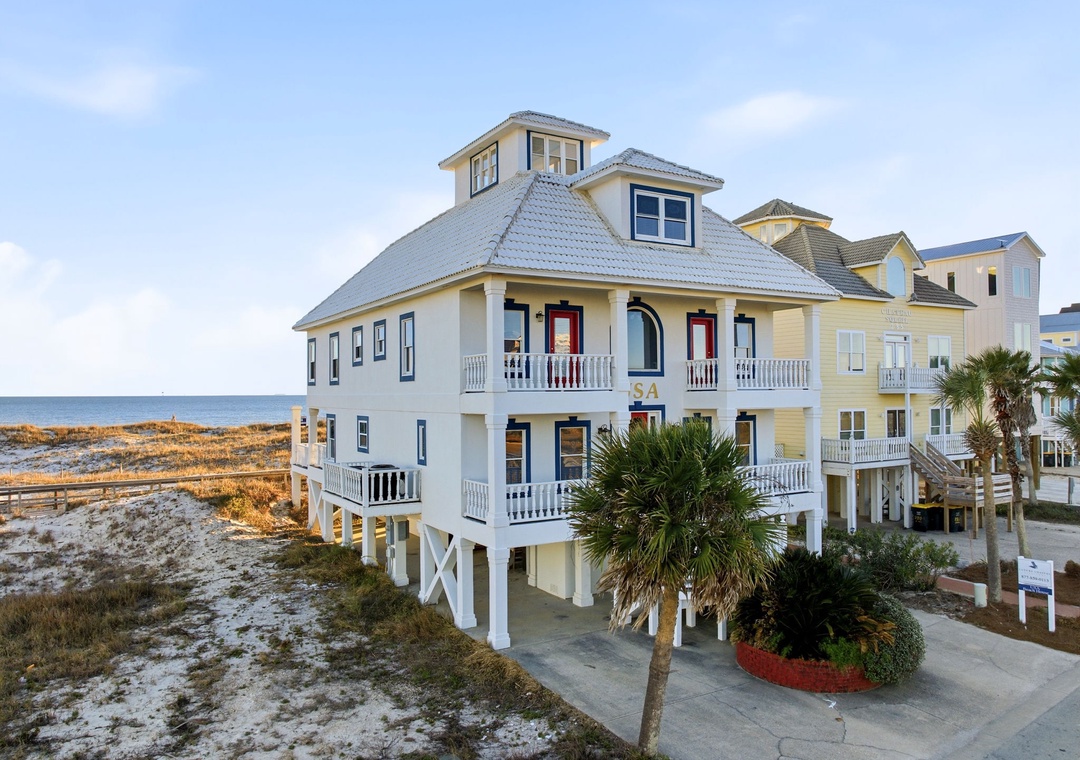
Myth: “Building on stilts is enough.” Correction: Elevation protects from water, but it increases the “Wind Load” on the structure. A raised house acts like a sail, requiring massive internal shear walls to prevent swaying or collapse.
-
Myth: “The seawall will protect the house forever.” Correction: Seawalls often accelerate the erosion of the sand at their base, eventually leading to a “Toe Failure” where the entire wall collapses into the ocean.
Conclusion
The pursuit of luxury coastal homes usa is an exercise in managing the inevitable. While the allure of the American waterfront remains undiminished, the definition of success in this market has shifted toward “Intelligent Stewardship.” The most valuable properties are no longer those that shout the loudest architecturally, but those that whisper their resilience through superior engineering and meticulous maintenance. In an era of rising tides and climatic unpredictability, the ultimate luxury is a home that respects the power of the sea while providing a sanctuary that is structurally and operationally prepared for the long horizon.
Leave a Reply